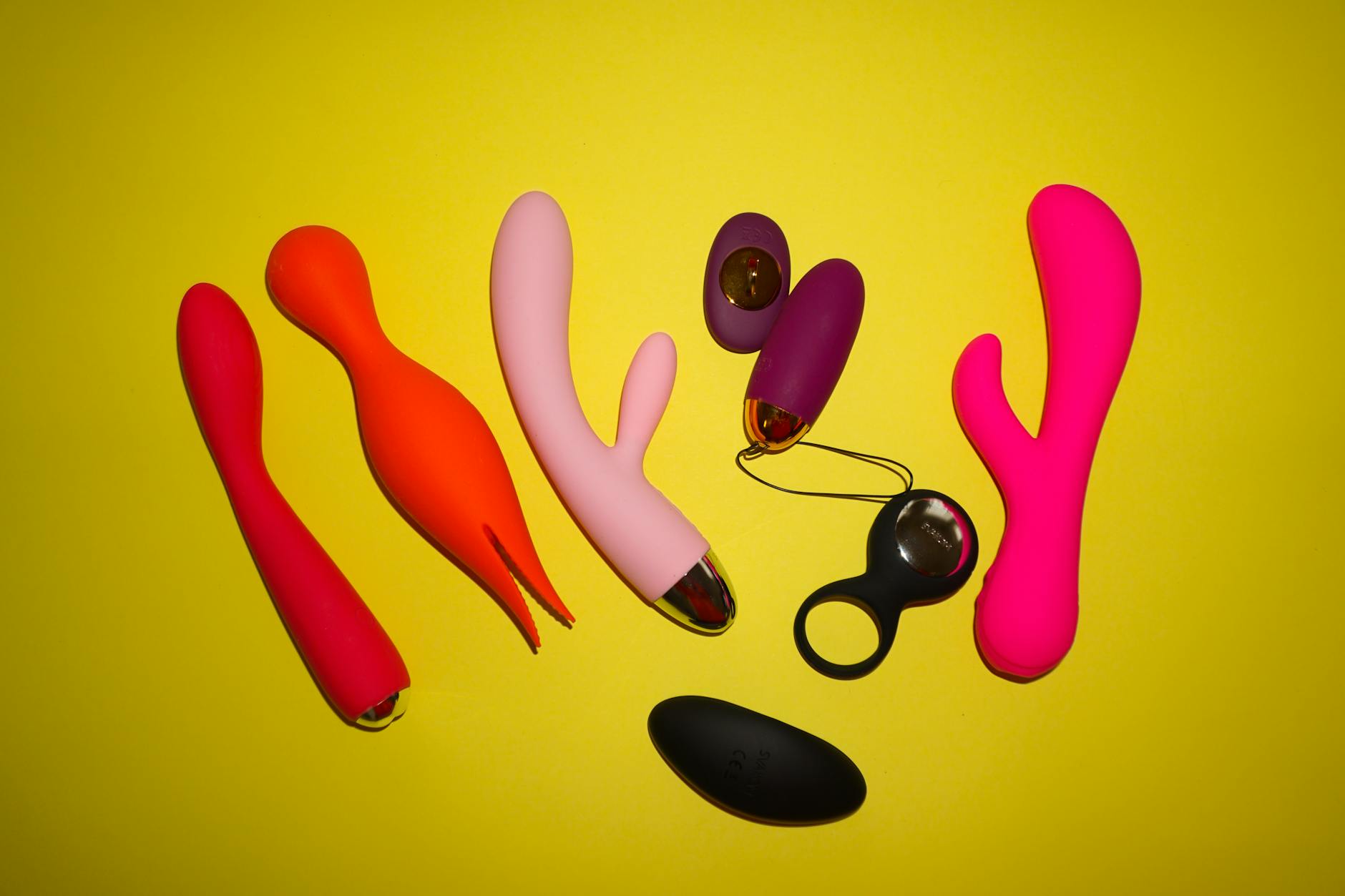
Here's what nobody tells you about your cycle and pleasure
Your clitoris doesn't work the same way every day of your cycle. Between ovulation and menstruation, your hormones spike in ways that literally change blood flow, tissue sensitivity, and how your nervous system responds to stimulation. If you've noticed that your lemon vibrator (or any clitoral vibrator) feels more intense mid-cycle, you're not imagining it. Your body is actually wired to feel differently.
The fertile window—roughly five days leading up to ovulation and the day of ovulation itself—is when this shift peaks. Your estrogen and testosterone climb together. Your clitoris swells slightly, increasing sensitivity. Blood pools in the pelvic area. The result: sensation amplifies.
For people using lemon sexual toys or other air-suction vibrators during this window, the experience can feel dramatically different. Not necessarily better or worse, but distinct enough that many folks find themselves changing settings, duration, or approach mid-cycle. Understanding why helps you work with your body instead of fighting it.
What hormones actually do to your clitoris
Estrogen and testosterone both flood your bloodstream during the fertile window. Here's the mechanical part.
Estrogen increases vaginal and clitoral blood flow. More blood means more engorgement, which means tissues swell slightly and become more sensitive to touch. Your clitoris can visibly swell during arousal mid-cycle—sometimes noticeably more than it does during other phases of your cycle.
Testosterone (yes, people with cycles produce it too, and it peaks right before ovulation) directly amplifies sexual desire and makes nerve endings more responsive. That's not psychological. That's neurochemistry.
The pelvic floor also shifts. During your fertile window, pelvic floor tension naturally increases slightly, which changes how stimulation registers. Some people report orgasms feeling sharper or more localized. Others find that the same intensity that felt perfect last week now feels overwhelming.
Why your favorite lemon vibrator feels different mid-cycle
Lemon vibrators and other clitoral suction toys work by creating gentle pressure waves rather than direct vibration. During your fertile window, that suction mechanism can feel more intense for a few reasons.
First, your clitoris is already more engorged. The tissue is literally closer to the surface and more sensitive. A setting you've been using all month suddenly registers as stronger because you're starting from a more stimulated baseline.
Second, your arousal threshold drops mid-cycle. You get turned on faster. Your brain is primed by hormones to be more receptive. That mental state actually changes peripheral sensation—you're more attuned to subtle touch, which means the Lem vibrator (or any lemon clitoral vibrator) feels noticeably more powerful even at the same setting.
Third, suction toys depend on engorgement to work well. When your tissues are already swollen, the seal is better, the suction stronger, and the sensation more direct. It's not the toy changing. It's the target tissue responding more intensely to the same input.
The reality of sensation across your cycle phases
Breaking this down by phase helps you predict and prepare.
Menstruation (days 1-5). Estrogen and progesterone bottoming out means less engorgement, reduced clitoral sensitivity, and often a preference for deeper, broader pressure over pinpoint suction. Many people skip the Lem during their period or use it on lower settings. That's normal and expected.
Follicular phase (days 6-12). Estrogen is rising but hasn't peaked yet. Sensitivity increases gradually. By the end of this phase, your clitoral vibrator will start to feel noticeably better than it did during menstruation. Some people notice increased interest mid-week.
Fertile window and ovulation (days 13-15, though this varies). Peak sensitivity. Your lemon vibrator, air-suction toys, or any clitoral stimulation will likely feel more intense and require less time to build arousal. This is when many people report shorter paths to orgasm and more powerful sensations.
Luteal phase (days 16-28). After ovulation, progesterone rises and estrogen drops. Sensitivity decreases again. You might find yourself needing higher settings, longer warm-up time, or different types of stimulation. This isn't failure. It's your body shifting into a different biochemical state.
If you track your cycle, you can cross-reference pleasure notes with your calendar. Most people find a clear pattern within 2-3 months.
How to adjust your practice mid-cycle
You don't need to change your toys. You need to change your approach.
Start lower during your fertile window. If you normally use pattern 3 on your lemon sucker toy, try pattern 1 or 2 mid-cycle. You'll likely find more pleasure at a lower baseline, which means less risk of overstimulation and more room to build intensity if you want it.
Give yourself longer warm-up during the luteal phase. After ovulation, arousal takes longer to build. That's not reduced desire—it's a shift in your nervous system. Budget an extra 10-15 minutes. Use lower settings for longer. The pathway to pleasure is still there. It just takes a different route.
Track what changes, not just when. Note which settings feel best, how long arousal takes, and what type of stimulation works during different phases. After three cycles, you'll have a map of your own pleasure landscape. That's information you can use for the next ten years.
Consider intensity timing differently mid-cycle. Some people find that during their fertile window, they can reach orgasm quickly but might want to prolong the experience. You have the neurochemical advantage mid-cycle—the Lem vibrator or clitoral vibrator you're using will do most of the work. That's a feature, not a bug. Use it deliberately.
When mid-cycle sensitivity becomes uncomfortable
Sharp pain, burning, or overstimulation mid-cycle isn't normal and shouldn't be pushed through. A few reasons this happens.
If you have a history of vulvodynia or vulvar pain disorder, cycle sensitivity swings can trigger flare-ups mid-cycle. That's documented and worth discussing with a vulvovaginal pain specialist. Some people find that using a lemon vibrator with a sensitive clitoris after medication requires cycle-aware adjustments too.
If you're on hormonal birth control, your cycle hormones are suppressed, which means you shouldn't be experiencing the same mid-cycle swing. If you are, talk to your doctor. Sometimes it indicates that your dosing needs adjustment.
If you've recently started an antidepressant or other medication affecting sensation, cycle shifts might feel more extreme. How lemon vibrators help restore sensation after antidepressants covers this more directly, but the short version is that hormonal swings can compound medication-related sensory changes.
The partner conversation
If you're with someone, mid-cycle sensitivity changes can feel confusing to them if they're not explained. "It felt perfect last week but now it's too intense" sounds like rejection. It's not. It's biology.
The easiest frame: "My body feels different during different parts of my cycle. Sometimes I want more intensity, sometimes less. That's not about you. That's about what my nervous system needs right now." Most partners get it immediately once they understand it's not personal.
If you use lemon vibrators together, your cycle-awareness helps both of you. You know what you want. They know when to turn it up and when to dial it back. How to use a lemon vibrator with your partner goes deeper into partnered dynamics, but the cycle piece matters.
The surprising advantage of knowing this
Once you map your cycle's pleasure fingerprint, you're not at the mercy of it. You're working with it.
During your fertile window, you have a legitimate neurochemical advantage. Your body is primed for pleasure. If you want to use that—for solo play, partnered sex, or just understanding your own capacity—you can lean into it. That peak sensitivity is a feature of your biology, not a flaw.
During your luteal phase, you're not broken. You're just operating from a different baseline. Knowing that, you can adjust duration, intensity, and approach without shame or confusion. You're not broken when something that worked three weeks ago doesn't work now. You're cycling.
The Lem vibrator, any lemon clitoral vibrator, or air-suction toy you're using isn't the variable. Your body is. Once you know how your own body shifts, every tool you use becomes more effective, and every experience becomes less mysterious.
People also ask
Does cycle tracking actually matter if I'm on birth control?
Hormonal birth control suppresses ovulation and flattens hormonal peaks, so the mid-cycle sensitivity swing is typically minimal or absent. That said, some people on hormonal birth control still notice subtle shifts in desire or sensation based on their pill timing or patch cycle. Worth tracking if you're curious, but if you're not noticing changes, your birth control is doing its job.
Can I use a clitoral vibrator during my period?
Completely. There's no physical reason not to. You might find that you prefer gentler settings or broader pressure during menstruation, and that's true for many people. Some folks skip stimulation during their period for comfort reasons. Others find it helps with cramps or mood. The choice is yours.
Why do I feel less interested in pleasure during my period?
Lower estrogen and testosterone during menstruation naturally reduce sexual desire and arousal speed. That's not low libido. That's your hormones. Interest typically returns as estrogen rises in the follicular phase. If reduced desire during menstruation bothers you, you can still self-pleasure—it often feels different but can still be pleasurable.
Should I change my lemon sucker toy settings during my fertile window?
Yes, usually. Most people find that higher settings mid-cycle feel overwhelming, so lowering your starting intensity and building from there works better. But this varies person to person. Track what feels right and adjust your approach, not necessarily the toy.
Can extreme mid-cycle sensitivity mean something's wrong?
If mid-cycle sensitivity triggers pain rather than pleasure, or if it's so extreme that any touch feels unbearable, that's worth discussing with a gynecologist. It could indicate vulvodynia, hormonal imbalance, or another condition affecting pelvic sensation. Don't push through pain. Get it checked.
Does cycle sensitivity affect partnered sex differently than solo play?
Sometimes. With a partner, psychological factors (pressure, self-consciousness, communication gaps) can override or complicate the physical sensitivity shift. Solo play lets you feel the pure biology of your cycle. If you notice mid-cycle changes solo but not with a partner, communication and comfort are the variables to investigate.