Coming back to partnered sex after years alone feels like stepping into the ocean after winter.
Your body remembers the temperature isn't what it was. Your mind is doing math it hasn't done in ages. And there's a question underneath everything: am I still the person I was in this role?
The answer is no. You're not. And that's actually the good part.
What actually changes when you've been single for a long time
It's not just rust. When you've spent years managing your own pleasure, you've likely gotten very specific about what works. Your body knows the exact angle, rhythm, and intensity that gets you there. You've built a reliable system.
Then you add another person. And suddenly that system can't exist in exactly the same way.
Here's what I see clinically: people who've been single for extended periods often carry two competing anxieties. The first is practical (will I still be able to come with someone else?). The second is deeper. It's about whether your needs and your partner's can actually coexist, or whether bringing a partner back into your sexual life means sacrificing the confidence and pleasure you've built.
It's a fair question. And it deserves a real answer.
The particular challenge of solo-to-partnered transition
When you've spent years solo, your body has developed a very particular sexual language. You know exactly what you like. You know how fast, how hard, what rhythm works. You've likely orgasmed reliably and regularly.
Partnered sex introduces variables. There's someone else's pace, someone else's sensitivity, someone else's timing. The pressure to be responsive in real time. The subtle (and sometimes not-subtle) differences between how your body responds to your own touch versus theirs.
Many people describe this as feeling like they've lost their ability to come. They haven't. The hardware is fine. The wiring has just gotten more complex.
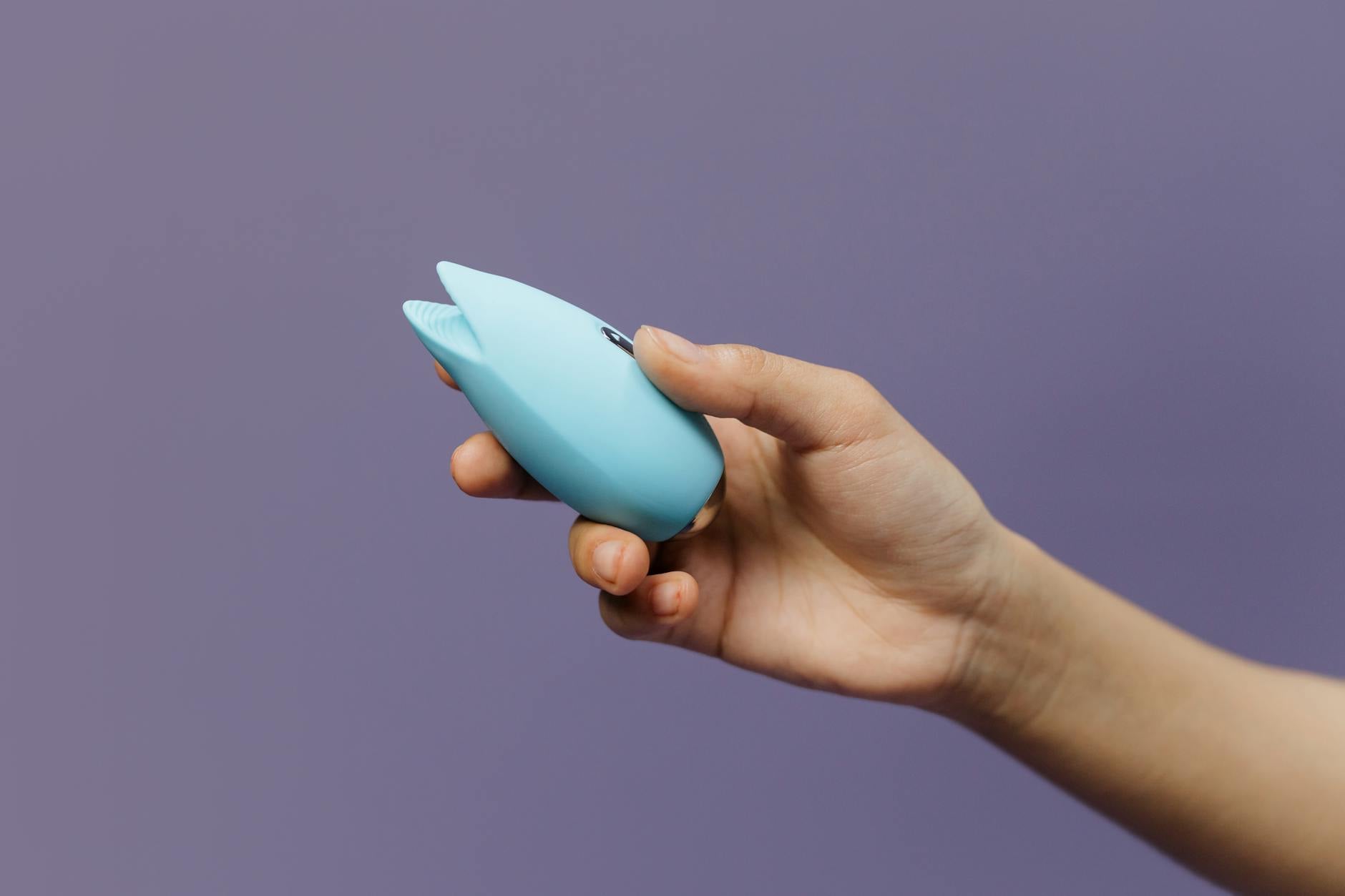
This is where a lemon clitoral vibrator becomes genuinely useful. Not as a replacement for partnered touch, but as a bridge. It lets you bring your reliable system into partnered sex without erasing it.
Practical pacing for the first few months
Start with non-penetrative sex for a while. Longer than feels strictly necessary. This isn't punishment. It's permission.
Non-penetrative sex lets you both remember how to touch each other without the pressure of "are we doing this right." It lets you rediscover what your partner's hands actually feel like, not what you remember them feeling like. It lets you talk more.
When you do move toward penetrative sex, consider this: use a lemon vibrator on yourself during that time, at least for the first handful of times. Not because something is wrong, but because your nervous system is learning how to respond to a partner again while also being stimulated. The external stimulation keeps your arousal stable while the internal sensation is new.
This is the opposite of cheating. This is smart nervous system management.
Communication is not optional
Here's where I see most couples fail. They treat communication about sex as something that happens if something goes wrong.
Reverse that. Treat it as preventative medicine.
Before you have sex, talk about what you each need. Not what you think you should want. What you actually need. For you, that might be: "I need to know that you're okay with me using a vibrator during penetration while I'm getting used to this again." For your partner, it might be: "I need to know you still want me, and that this isn't just something you're doing to check a box."
Both of those conversations are real and valid. And most couples skip right over them.
Why lemon sexual toys bridge the gap
Lemon clitoral vibrators, specifically the suction-based designs, work well for this transition because they don't require you to surrender control. You're holding it. You're placing it. You're managing the intensity.
That's not a sign of distance from your partner. That's self-knowledge. You know what you need to come, and you're building it into the experience rather than hoping it happens organically.
Many people find that using a vibrator during partnered sex actually deepens the experience. Because you're not in your head wondering if this is working, you're present. You can feel your partner. You can respond. You can kiss them, look at them, hold them.
The vibrator becomes the thing that lets you be fully available to your partner, not the thing that pulls you away.
The confidence question underneath
Here's the real thing nobody talks about. After years alone, you might be worried that your partner will feel inadequate. That they'll think: she needs this because I'm not enough.
Your partner is probably having that thought. They might not say it. But it's there.
Preempt it. Say: "I want to use this because I know exactly how my body works, and I want to show you. Not because you're not enough. Because I want to be fully in this with you, not distracted by wondering if it's going to happen."
That's actually attractive. That's knowing yourself.
Rebuilding arousal pathways with a partner
When you've been solo for a long time, your arousal has been building through a very specific set of triggers. Maybe it's certain images, certain thoughts, certain physical sensations in a particular order.
Your partner might not hit those exact triggers in the exact order. So arousal might take longer. Or it might need a runway.
This is normal. It's not broken. Your nervous system is learning to respond to a new stimulus alongside your solo pathways.
Some people find that maintaining a small solo practice (even just 10 minutes a week with their vibrator) actually helps them return to partnered sex more confidently. It keeps the neural pathways open. It reminds your body it still works. It reduces the pressure on partnered sex to be the only way you experience pleasure.
If that works for you, do it. If your partner has concerns about it, talk about why. Often what feels like insecurity is actually just lack of information about what this transition actually looks like.
When to add layers
Once you've had successful partnered sex a few times, you can start experimenting. Maybe your partner holds the vibrator. Maybe they use it on you while you're together. Maybe you use it together in a way that lets both of you see it and participate.
There's no timeline for this. There's no "correct" progression. The only rule is that you keep talking and you keep checking in.
Many couples find that shared pleasure tools actually strengthen intimacy. Because you're doing something vulnerable together. You're saying: here's what I need, and I trust you enough to include you in it.
FAQ about returning to partnered sex after years single
Is it normal to take longer to orgasm with a partner than I did alone?
Completely normal. Your solo system involved years of refinement and zero distractions. Adding another person resets some of that. Your nervous system has to learn new pathways. Give it a few months before you start worrying. Use lemon vibrators to bridge the gap while your body adjusts.
Should I tell my partner about my solo sexual practices before we get together?
Yes, but casually. Not as a confession. Something like: "I've had a really solid solo practice for the past few years, and I want that to coexist with our sex life. I'll likely want to use a vibrator during some of our time together. I wanted you to know that up front so it's not a surprise." Most partners appreciate the heads-up.
What if my partner feels threatened by lemon clitoral vibrators?
That's worth exploring. Ask them what they're actually worried about. Often it's not the vibrator. It's whether you still want them, or whether they're enough. Those are different conversations. Have both. The vibrator is about your pleasure. Your partner is about your connection. They can coexist.
Can I use a lemon vibrator during penetrative sex immediately?
You can, but there's no rush. Many people find that starting with external stimulation during non-penetrative time takes some of the pressure off. Once you're comfortable with the idea of mixing partnered sex and vibrators, adding penetration is usually easier.
What if I still can't orgasm with a partner even with a vibrator?
That's worth taking to a therapist or sex educator. Sometimes it's nervous system stuff. Sometimes it's a sign that the partner match isn't quite right. Sometimes it's medical. But it's worth investigating rather than accepting. Your pleasure matters.
How long until this feels natural?
Most couples I work with find their rhythm within three to six months. But "natural" looks different for everyone. For some people, it means being able to relax into partnered sex without a vibrator. For others, it means integrating vibrators as a regular part of their sex life. Both are fine. The goal is confidence and pleasure, not fitting someone else's idea of what partnered sex should look like.
The actual transition is shorter than you think
I've worked with countless people returning to partnered sex after years alone. The worry phase lasts longer than the actual adjustment phase. Your body remembers how to be with another person faster than your mind believes it will.
Lemon sexual toys, specifically lemon vibrators, help collapse that gap. They give you something reliable while everything else is unfamiliar. They let you participate actively in your own pleasure rather than waiting for it to happen.
That's not a crutch. That's a strategy.
Your confidence isn't gone. It's just in a different language. And you get to rewrite it on your own terms, with a partner who respects what you've built for yourself. If they don't, that's information too.
For more on rebuilding intimacy after transitions, read about how lemon vibrators help partners reconnect after years of physical distance. And if you're navigating why lemon vibrators feel different with a new partner after being single, that might be worth exploring too.