
Let's start with the real part
Years apart. Then suddenly you're in the same room again. The emotional reunion is joyful. The physical reunion? Weirdly awkward. Bodies remember connection differently than hearts do. Touch that once felt automatic now requires intention. Your partner's hand on your shoulder doesn't immediately translate to arousal. That's not a sign the relationship is broken. That's a sign you need a bridge.
Lemon vibrators, particularly air-suction clitoral vibrators like the Lem, become that bridge. Not a replacement for your partner's touch. A catalyst for it.
What distance actually does to physical memory
When couples spend extended time apart, something specific happens neurologically. The neural pathways that link touch to arousal don't disappear, but they go quiet. Imagine a muscle you haven't used in months. The first time you use it, it feels foreign. That's what happens to your sexual response system after years of separation.
Your body hasn't forgotten how to experience pleasure. It's forgotten how to recognize pleasure quickly. You might need longer warm-up. More obvious stimulation. Direct pressure on specific areas rather than the gentle touch that used to work instantly.
This isn't failure. This is exactly why lemon clitoral vibrators help. They provide consistent, recognizable stimulation that wakes up neural pathways faster than hands alone can manage.
Why lemon vibrators work better than improvising
Here's the gap most couples hit: your partner wants to be the one creating pleasure, and you feel pressure to be aroused quickly so they don't feel rejected. Both of you are performing instead of reconnecting.
Introducing a tool changes the dynamic entirely. Suddenly it's not "Is my partner doing this right?" It becomes "We're exploring this together." The lemon clitoral vibrator becomes neutral ground. It's not your partner's inadequacy showing up. It's a tool you're both using to rebuild something that needs rebuilding.
Air-suction vibrators specifically work because they create sensation without the intensity of traditional vibration. After years apart, direct intense vibration can feel overwhelming. Suction is gentler, more rhythmic, and it allows your body to build arousal gradually instead of jolting into it.
The psychological piece nobody mentions
Years of distance often come with subtle shame. You worry your body has changed too much. Your partner worries they're not enough anymore. Those narratives sit underneath physical reconnection and tank it before you even start.
Using a lemon vibrator together interrupts that shame spiral. You're not in your head catastrophizing about what's wrong. You're focused on sensation, on communication, on what feels good right now. Your partner watches you respond to stimulation. They see you relax. They become part of creating your pleasure instead of being the perceived reason it's not happening.
I've worked with dozens of couples reuniting after separation. The ones who name the awkwardness directly and introduce tools early recover physical intimacy faster than couples who try to force the old pattern back.
How to actually introduce this without it being weird
Timing matters. Don't wait until you're already frustrated with lackluster sex. Have the conversation when you're clothed, not in bed. Something like: "I'm realizing touch feels different after all this time. I don't think anything's wrong. I think my body just needs to remember. Would you be open to trying something together that might help?"
Frame it as something you're doing together, not something you need because your partner isn't enough. Buy the lemon vibrator together if possible, or if that feels like too much, bring it up and let them help choose.
First time using it together, keep expectations low. This isn't a performance. You're testing the waters. Your partner can be beside you, watching, touching you elsewhere while you use the vibrator. Or you can use it alone first, get comfortable with the sensation, then introduce them to the experience once you've found settings that feel good.
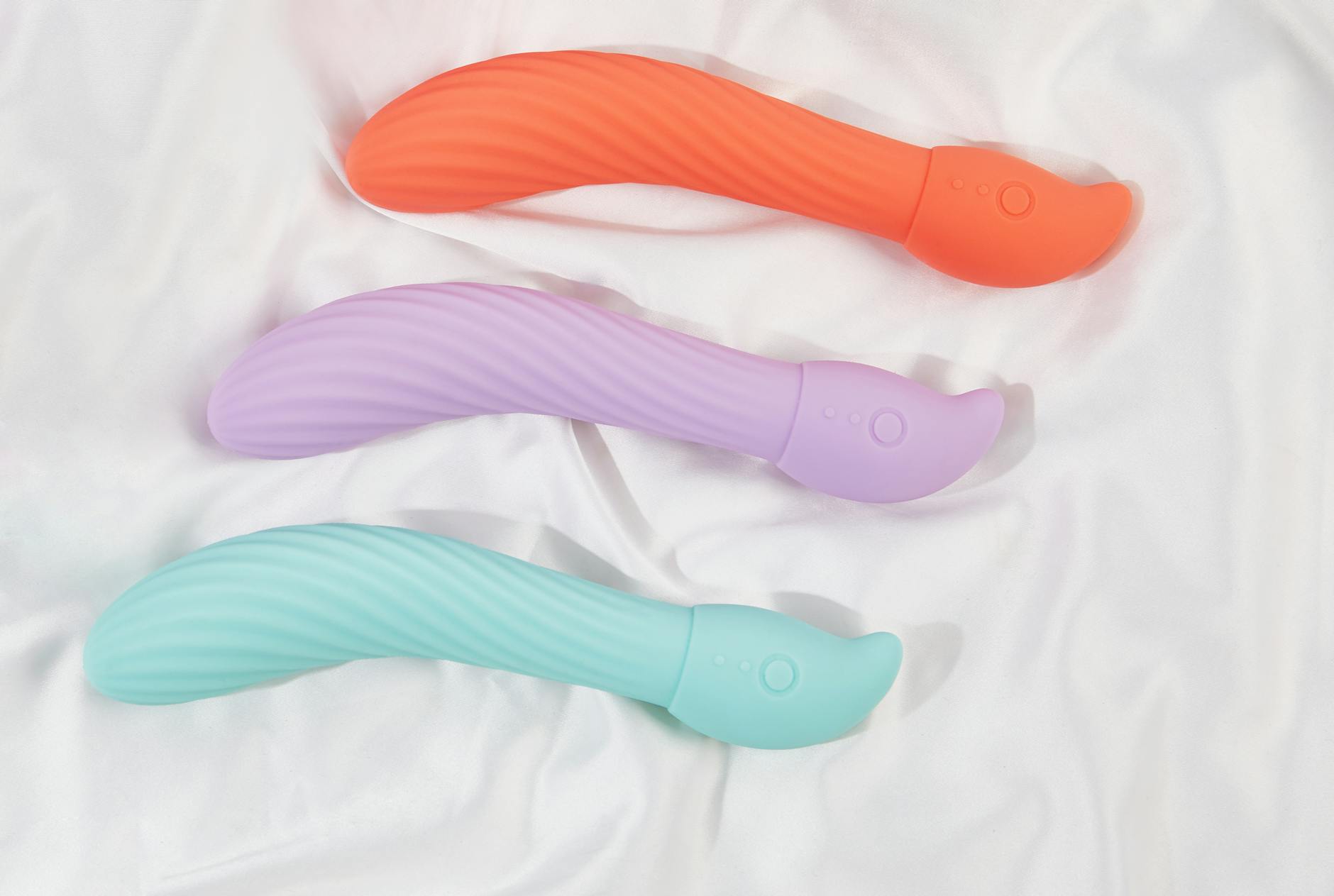
Photo by IFONNX Toys on Pexels
Rebuilding touch gradually
Once you've introduced the vibrator and you're both comfortable, the real work begins. You're relearning each other's bodies. This is actually an incredible opportunity. You get a second first time.
Spend time with the vibrator on lower settings. Let your partner control it while they kiss you, touch you, talk to you. There's no rush toward orgasm. The goal is sensation without pressure. Many couples find this phase is when intimacy deepens fastest, because you're forced to slow down and pay attention.
Gradually reintroduce partner touch alongside vibrator use. Your partner might use the vibrator while penetrating you, or you use it during partner sex. The idea is your nervous system learns that multiple sensations at once feel good again. That penetration and clitoral stimulation can coexist. That your partner's presence enhances rather than competes with the tool.
This usually takes weeks, not days. That's okay. You have time now.
What actually happens with consistent use
Here's what I observe clinically. Couples who use lemon vibrators during reconnection report three consistent shifts.
First, arousal comes faster. After a few weeks of regular use, your body remembers what pleasure feels like. Neural pathways light back up. You start feeling anticipation again.
Second, communication deepens. You're literally talking about sensation. What pressure feels good. What patterns feel better. That conversation bleeds into other intimacy. You start asking about emotional needs with the same directness.
Third, shame evaporates. You're both in it together. Using a tool that helps. Neither of you is failing. The relationship is just asking for slightly different tools than it needed before separation.
Long-term couples report that including vibrators during reconnection actually strengthens their connection beyond what they had before the separation. Partly because they're forced to be intentional. Partly because they've named the awkwardness directly instead of pretending it doesn't exist.
When to seek additional support
If weeks of consistent effort haven't rebuilt arousal, or if touch still feels foreign or aversive, there may be something deeper happening. Unresolved resentment about the separation. Attachment injuries. Grief about lost time. Those are relationship therapy conversations, not vibrator conversations.
A good couples therapist, ideally one trained in approaches like Gottman Method, can help you process what the separation actually cost and what reconnection actually requires. Vibrators are tools for physical reconnection. Therapy is the tool for emotional reconnection when years have created distance in more than geography.
But for many couples, introducing a lemon vibrator alongside honest conversation and patience rebuilds physical intimacy steadily and surprisingly quickly.
FAQ: Reconnecting physically after long separation
How long does it usually take to feel comfortable with touch again after years apart?
Three to eight weeks of regular, intentional physical connection. Some couples report arousal feeling normal again within two weeks. Others need two months. The timeline depends on how long you were apart, whether there's unresolved conflict, and how much pressure you're putting on the reconnection. Removing pressure actually speeds it up.
Can we use a lemon vibrator if my partner feels threatened by it?
This is worth a direct conversation. Many partners worry a vibrator means they're not enough. The truth is simpler. After years apart, your body needs help waking up. That's not about your partner's adequacy. It's about biology. Frame it as "This helps me respond to you faster. That serves both of us." If they're still resistant after that conversation, couples therapy can help you both move through the barrier.
Should we use the vibrator every time we have sex while reconnecting, or just sometimes?
Start with every time. You're rebuilding a pattern. Consistency matters. Once arousal feels automatic again and you're reconnecting without the vibrator, you can use it less frequently. Many couples keep it as a regular tool even after reconnection feels solid. There's no "graduation" away from vibrators. They're just part of your toolkit now.
What if I'm not sure my partner wants to reconnect physically after all this time?
Name it directly. "I'm nervous about physical reconnection because I don't know if you want it as much as I do." That conversation needs to happen clothed, not in bed. You might discover they're nervous too. Or you might discover the separation changed something fundamental. Either way, you know. Then you can actually decide together instead of both performing.
Is it normal for orgasm to feel different after years of separation?
Completely normal. Your pelvic floor may have changed. Your nervous system may respond differently to stimulation. You might need different rhythm or pressure. That's not something broken. It's something to explore. A lemon clitoral vibrator lets you experiment with settings and patterns without pressure. You're discovering your body again, which is actually kind of amazing.
How do I know if we should try this or just see a therapist first?
Try this if you both want physical reconnection but the gap feels awkward and pressure-filled. See a therapist first if you're not sure you want to reconnect, if there's resentment about the separation, or if touch feels aversive rather than just unfamiliar. Vibrators help rebuild physical intimacy. Therapy helps rebuild emotional intimacy. Most couples need both, just sequenced differently depending on what broke first.
The real truth about reconnecting
Years apart doesn't mean you've broken something unfixable. It means you've both changed, and your nervous systems need to recognize each other again. That recognition comes faster with tools that create clear, consistent sensation. A lemon vibrator isn't a workaround for a bad relationship. It's a practical tool for a relationship that's weathered distance and is ready to come home.
Want to talk through what reconnection looks like for your specific situation? Reach out to our team. We're here to help couples figure out what tools and approaches make sense for them.
References and further reading
- Gottman, J. M., & Silver, N. (2015). The Seven Principles for Making Marriage Work. Harmony.
- Johnson, S. M. (2008). Love Sense: The Revolutionary New Science of Romantic Relationships. Little, Brown.
- Perel, E. (2018). Mating in Captivity: Unlocking Erotic Intelligence. HarperCollins.
- Nagoski, E., & Nagoski, A. (2017). Come As You Are: The Surprising New Science That Will Transform Your Sex Life. Simon & Schuster.