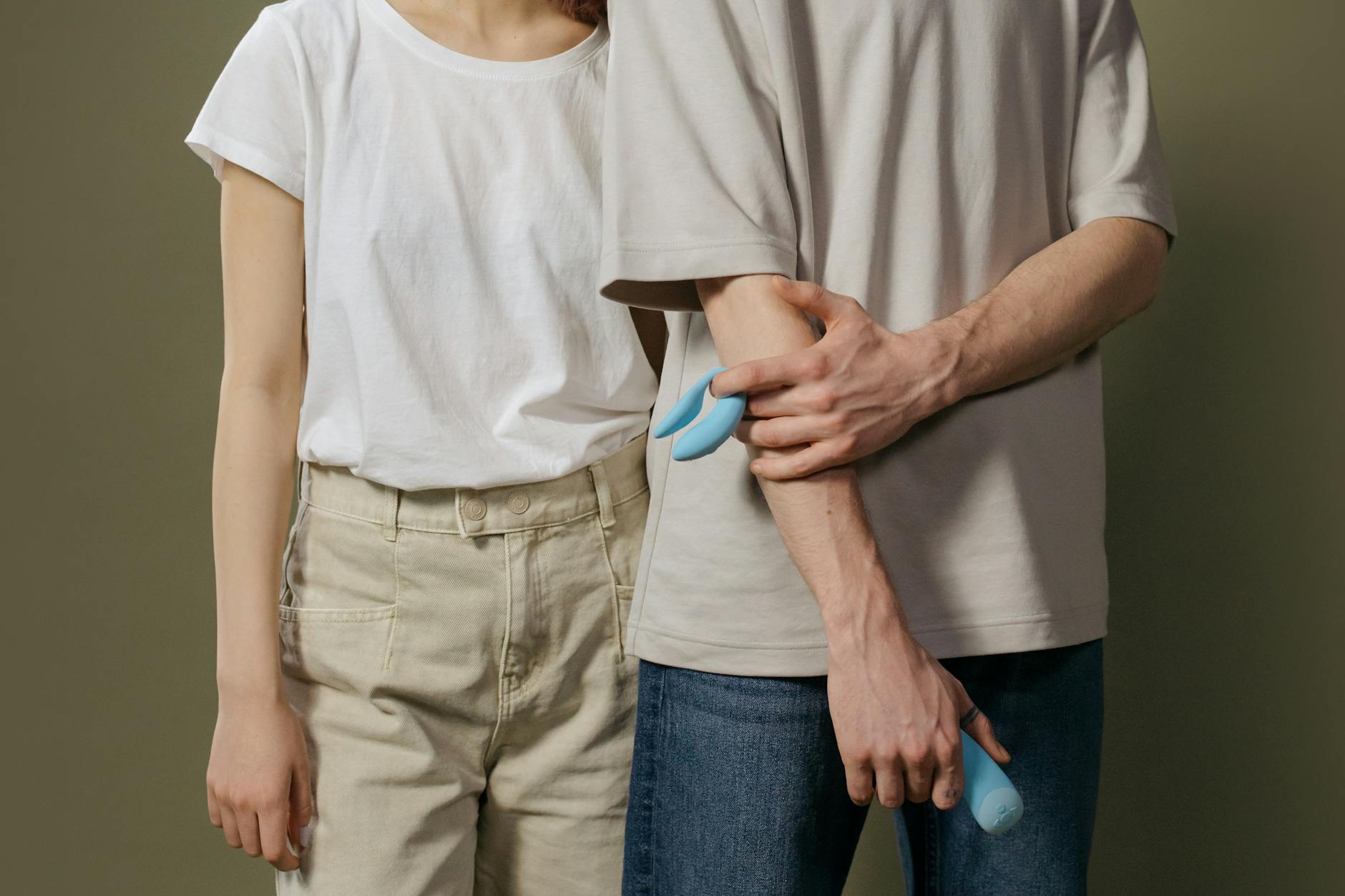
Let's talk about what you already know
You've spent time alone with your lemon vibrator. You know exactly how it feels against your body, what patterns work best, how long it takes to reach a point where everything clicks. You've built a relationship with your clitoral vibrator that's uncomplicated and reliable. Then someone new enters the picture, and suddenly that same toy feels like a completely different object in your hands.
This isn't in your head. The experience genuinely changes. And it's not because the lemon vibrator changed. It's because you did.
The nervous system shift nobody mentions
When you're alone, your parasympathetic nervous system has space to settle. Your breathing drops. Your guard releases. There's no part of your brain calculating whether you look okay, whether your sounds are too loud, whether the person watching you is bored or judging.
The moment another person is present, your sympathetic nervous system activates a little. This is normal. It's also the reason your arousal response feels different, your orgasms might take longer, and the intensity of sensation from your lemon clitoral vibrator can feel muted even though it's doing exactly what it always did.
You're not broken. Your nervous system just hasn't finished trusting yet.
Why sensation actually does change
Beyond the psychological piece, there's a real physical component. When you're aroused alone, you have complete control over pacing. You can stay in the buildup phase as long as you want. You can let excitement peak and drop and rise again. Your body becomes utterly predictable to you.
With a partner present, even a supportive one, that rhythm shifts. You might unconsciously rush yourself. You might tense your pelvic floor slightly, waiting for feedback from them. The suction sensation from your lem vibrator might feel sharper or less intense depending on whether you're holding it at the exact same angle, applying the exact same pressure.
These tiny variations aren't failures. They're adjustment periods.
The emotional weight you're carrying
Here's what I see most often in my practice: women and people with vulvas who've been single for a meaningful stretch have built an entire relationship with their own pleasure. It's yours. It's private. It's absolutely reliable. Then suddenly you're negotiating that space with someone else, and there's an invisible pressure that shows up.
You might worry that using a lemon vibrator in front of a partner is less sexy, less "real," less connected. (It isn't any of those things.) You might feel self-conscious about needing it, as if pleasure that requires external tools is somehow less valid than pleasure that doesn't. (Also not true.) You might panic that the intensity or ease of your response alone was temporary, a kind of honeymoon phase with yourself that's now over.
These stories are worth examining because they shape how you show up sexually.
What actually helps during the transition
Four concrete moves, in order:
1. Tell your partner exactly what's happening. Not the shame version ("I'm worried this is weird"), but the truth version ("My body responds differently with someone here, and that's normal. It might take a little longer for me to relax. That doesn't mean anything's wrong."). You're not asking for permission to use a toy. You're giving context for what they're about to witness.
2. Use the lemon vibrator alone first, then with them watching. Don't skip the middle step. Let them be present while you pleasure yourself with your clitoral vibrator before you try using it together. This removes the performance pressure from yourself while building their familiarity with what your pleasure actually looks like.
3. Return to basics on pressure and pacing. If you're used to starting on pattern 5 or 6 alone, begin at 2 or 3 with your partner in the room. This isn't regression. This is meeting your nervous system where it actually is, not where you wish it was.
4. Separate his pleasure from yours. Many people assume the lemon vibrator should satisfy their partner too, that it's some kind of couples' tool. It isn't. It's your tool. The pleasure it gives you is the turn-on. Don't put energy into making it work for both of you simultaneously.
The timeline nobody talks about
Most people need 6 to 12 weeks of regular partnered sexual activity before their nervous system genuinely settles. That means full comfort, predictability, trust that they won't be judged. During that window, everything might feel different or muted or slightly off.
This doesn't mean you're not attracted to them. It doesn't mean the relationship is wrong. It means your body is still deciding whether it's safe to completely let go. That's actually a really healthy response.
Some people move through this faster. Some slower. Neither is right or wrong. But knowing it's a normal phase, rather than a sign of incompatibility, changes how you move through it.
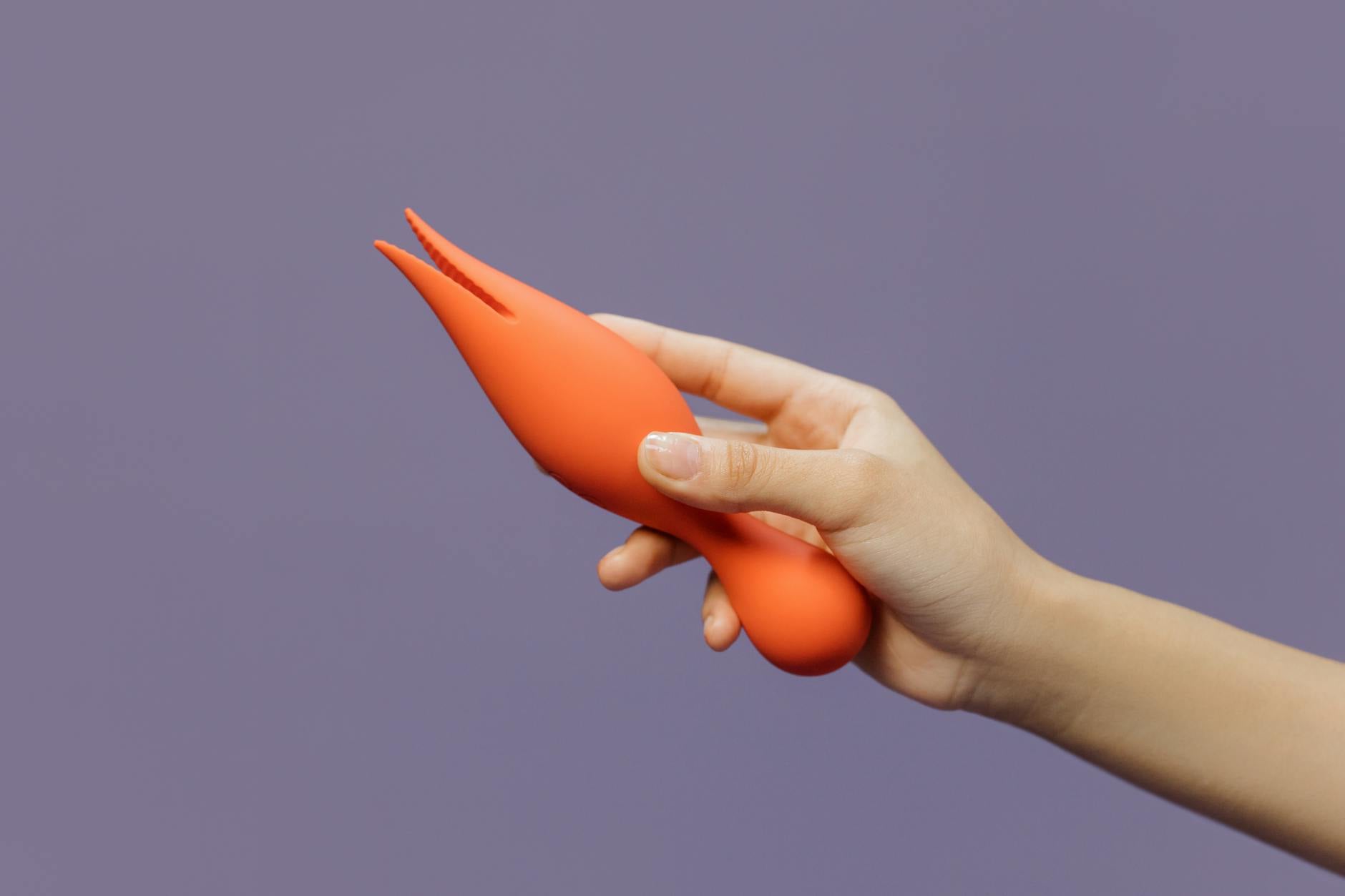
Photo by cottonbro studio on Pexels
Communication that actually works
Don't ask your partner, "Is this okay?" Yes, they'll say yes. But you're asking them to do emotional labor they don't need to do. Instead: "I love using this. It helps me feel good. I'd love for you to see what that looks like."
If they seem uncomfortable, that's information worth addressing. But it's separate from whether you use a lemon vibrator. Your pleasure isn't contingent on their enthusiasm. It's contextual. You're just giving them the chance to understand it.
When you're using the clitoral vibrator together, check in afterward about what felt good, what didn't, what you want to try next time. This isn't therapy. It's just normal conversation about sex, which most couples don't actually have.
What changes as trust deepens
After about 8 to 12 weeks of consistent partnered sex, something shifts. Your nervous system recognizes this person as safe. Your body stops waiting for judgment. Using your lem vibrator in front of them stops feeling exposed and starts feeling intimate.
Many people find that their orgasms become more intense at this point, not less. The sensation from the lemon vibrator feels richer. The speed of arousal increases again. This isn't because the toy is different. It's because you finally are.
Some couples find that incorporating a lemon clitoral vibrator into shared touch becomes a tool for both of you. Others keep it as solo territory within partnered time. Both are fine. You're just not making decisions from anxiety anymore. You're making them from actual preference.
The reframe that matters
Lemon vibrators don't feel different with a new partner because something is wrong with you, the toy, or the relationship. They feel different because the context changed and your nervous system is still calibrating to safety. That's not a flaw. That's your body doing exactly what it's supposed to do.
Your pleasure alone was never less real. It was just a different kind of real. This version, with another person learning how you work, isn't better. It's just different. Give yourself permission to let both feel good.
People also ask
Should I use a lemon vibrator with a new partner right away or wait?
Wait until you feel some baseline comfort, usually 3 to 4 weeks of regular sexual contact. Not because there's anything wrong with it, but because you want your nervous system somewhat settled first. Once you've had sex a few times and the newness has worn off slightly, introducing a lemon clitoral vibrator becomes a conversation, not a surprise.
What if my partner seems uncomfortable with me using a vibrator?
That's worth discussing directly. Ask what the discomfort is actually about. Often it's not the toy itself. It's a fear that he's not enough, or a misunderstanding about what the toy does. Reassure him: this isn't about replacing him. This is about your body and what helps it feel good. If discomfort persists after conversation, that's a sign that his insecurity might be a bigger relationship issue worth addressing.
Can I use a lemon vibrator if I'm worried it will make partnered sex feel less intense?
Actually, the opposite often happens. As you get more comfortable using your clitoral vibrator with a partner, you learn what your body genuinely needs. That knowledge makes partnered sex better, not worse. You stop performing and start actually experiencing.
Does using a lemon vibrator alone before partnered sex make me "less ready" for real intimacy?
No. Solo pleasure and partnered pleasure aren't opposing forces. They're complementary. People who know their own bodies actually have better partnered sex because they can communicate what works. Your relationship with your vibrator is part of your sexual education, not a distraction from it.
How do I explain to a new partner why sensation feels different when they're watching?
Simple: "My nervous system responds differently when someone's here. That's normal. It doesn't mean I'm not into this or into you. It just means my body takes a minute to completely relax." Most partners will understand this immediately. It's honest, it's vulnerable, and it removes the pressure on both of you to perform.
What if my arousal takes way longer with a partner than when I use my lemon vibrator alone?
This is incredibly common and usually temporary. Your nervous system is still in slight high alert. Build in more foreplay. Use the vibrator earlier in the encounter rather than waiting until you're already aroused. Let yourself need what you need without shame. As trust deepens, speed usually returns naturally.
The thing worth knowing
You didn't lose your ability to feel pleasure. You didn't break the thing that worked alone. You're just inhabiting a different kind of arousal context, and your whole system is responding to that shift. That's not a problem to solve. It's just a reality to move through with patience and honesty.
Your lemon vibrator is still your tool. Your pleasure still belongs to you. The presence of another person is just one variable in the equation. As that variable becomes familiar, everything else normalizes again. Usually faster than you think.
If you're in the thick of this transition right now, be gentle with yourself. Your body is exactly where it needs to be. Give it time, give it honesty, and give it permission to need what it needs. The intensity you had alone isn't gone. It's just taking a slightly different shape.