
Here's the thing about pleasure preferences
One partner loves deep internal sensation. The other finds it uncomfortable or numbing. One wants clitoral stimulation as the main event. The other feels overstimulated or irritated there. You love the sensation of a vibrator. Your partner doesn't respond to vibration the same way, or feels it's too intense.
This is not a compatibility problem. It's a setup problem. And lemon clitoral vibrators can actually be the bridge that turns what feels like a mismatch into something that works for both of you.
Why external-only preferences are more common than you think
External stimulation can feel more accessible, less invasive, and sometimes more reliably orgasmic than internal penetration. For some people, the clitoris is the main event, full stop. For others, internal sensation feels dull or uncomfortable. Neither of these things is unusual or wrong.
The problem happens when one partner is built for internal pleasure and the other is fully external, and neither of you has tools to bridge that. You end up choosing one person's pleasure over the other. Someone compromises. Resentment builds quietly.
Lemon adult toys, and specifically clitoral vibrators, give you a third option: pleasure that's entirely external, intensely focused, and infinitely variable. You can adjust pressure, pattern, and duration to match exactly what feels good. Your partner gets what they actually need. You get to be part of it.
The anatomy that explains why external works better
The clitoris has 8,000 nerve endings packed into a tiny space. External stimulation reaches all of them without requiring anything internal. For people who prefer this, it's not a limitation. It's where the majority of sensation actually lives.
Some people find that internal penetration distracts from clitoral pleasure rather than enhancing it. Some have anatomy where the angle doesn't create friction in the right place. Some simply have a lower tolerance for internal intensity and prefer the concentrated sensation that external stimulation provides.
There's also a psychological component. External-only pleasure can feel more present, less about performance, less about "doing it right." It's just pure sensation with nowhere to hide.
How to talk about this without turning it into a problem
This conversation matters because without it, someone defaults to the other person's preference and starts to resent touch. Here's the frame that works:
"I notice that when we're together, my body responds better to external stimulation. That's not about you. That's just how my nervous system is wired. I want us to figure out what actually feels good for both of us, and I think we're missing something when we skip what my body is asking for."
That's not "you don't satisfy me." That's "here's what I need to feel good, and I want you involved in discovering that."
Your partner might worry they're not doing it right, or that you're not attracted to them. They're not. You just have different neural maps. Once that separation happens, the rest becomes logistics.
Where lemon vibrators enter the picture
A lemon clitoral vibrator is a tool your partner can actually use on you. It's not about them learning to replicate something their body can't do. It's about adding a tool that does one thing incredibly well.
The Lemon Sucker product line is designed specifically for clitoral pleasure. The suction mechanism targets external tissue without requiring the kind of sustained finger friction that fatigues a partner's arm. Your partner can focus on the experience rather than on performance.
You can also use a lemon vibrator during partnered penetration if that's something you both enjoy. The external stimulation doesn't compete with internal sensation. It enhances it, because you're hitting different nerve pathways simultaneously.
Three ways to actually integrate this into partnered sex
Scenario one: foreplay only. Your partner uses the lemon vibrator to bring you to the edge during foreplay, then you transition to whatever comes next. This takes the pressure off for anyone to provide something they're not built for. Everyone gets to feel successful.
Scenario two: concurrent pleasure. They focus on whatever feels good for them while you use the vibrator on yourself, or they operate it. No one's waiting. No one's performing. You're both receiving at the same time.
Scenario three: the main event. Some partners get their pleasure from giving pleasure. If that's your situation, a lemon clitoral vibrator becomes a collaborative tool. They control it. You guide them. There's intimacy in that choreography.
Start with whichever scenario feels most natural for your dynamic. You don't have to architect the entire thing in one conversation.
Managing the psychological part
Here's what can happen. You introduce a vibrator. Your partner feels replaced. Or you feel like you're doing something that requires a tool instead of their touch. These feelings are real and they're worth addressing directly.
The truth is simple: external pleasure isn't a substitute for your partner. It's a specification. You wouldn't ask someone with small hands to produce the same grip strength as someone with large hands. You'd acknowledge the difference and adjust your approach.
There's actual intimacy in saying "here's what my body needs," and having your partner be willing to meet you there. That's not distance. That's honesty.
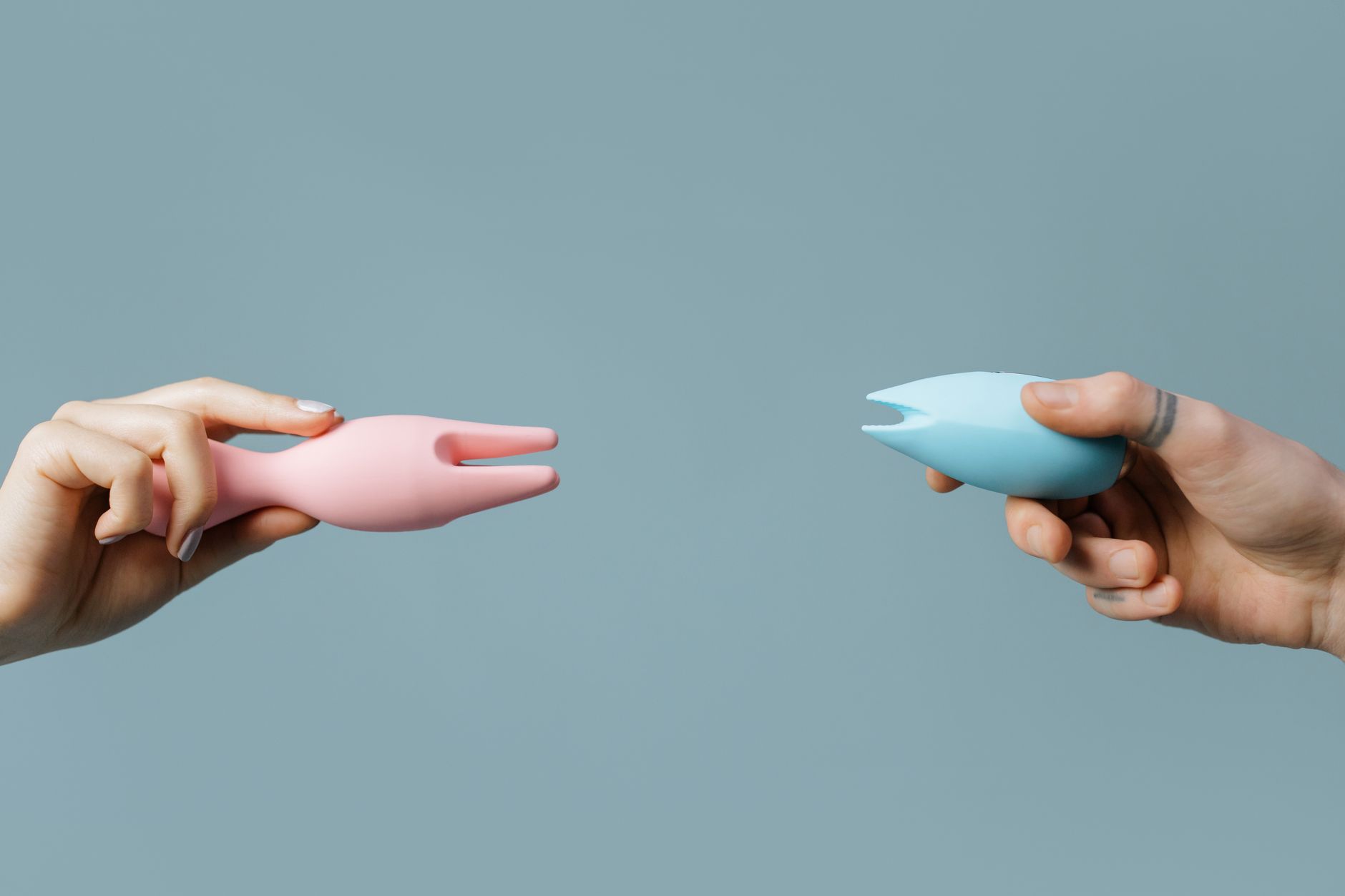
Photo by cottonbro studio on Pexels
The sensation piece: why vibration matters for external-only pleasure
Vibration hits clitoral nerves differently than static pressure does. It's a series of rapid micro-stimulations rather than sustained friction. For some people, this is the only thing that reliably produces orgasm. For others, it's the most comfortable option because it doesn't risk irritation the way manual friction can.
Lemon vibrators are specifically designed for clitoral sensitivity. The suction feature means your partner doesn't have to apply as much direct pressure to create sensation. That matters if you have sensitivity issues, if you're recovering from something, or if you simply need gentleness.
You can also explore patterns and intensities. How to Find the Right Lemon Vibrator for Your Sensitivity Level walks through the different settings. Start low. Most people assume they need high intensity. They don't.
When external-only preferences signal something else
Sometimes external-only pleasure means pure anatomy and preference. Sometimes it's worth checking in with whether there's pain, numbness, or trauma history that's shaping the preference. Those things aren't problems. They're information.
If internal sensation feels painful, see a pelvic floor physical therapist. If it feels numb, that might be medication-related or nerve-related, and it's worth exploring with a gynecologist. If there's trauma history, that deserves space and possibly professional support.
A lemon vibrator is a great tool regardless. But sometimes the tool isn't the whole answer. Sometimes you need the tool plus some investigation into what's driving the preference.
Building a shared pleasure practice
This isn't about compromise. It's about both of you actually finishing during sex. The couples I work with who embrace their different preferences don't feel mismatched. They feel solved.
One partner learns to love the vibration. Or they develop a rhythm where external pleasure is built into the beginning of every encounter. Or they get curious about whether internal sensation might feel different with external stimulation happening simultaneously.
The couples who struggle are the ones trying to force themselves into someone else's template. The couples who thrive are the ones who say "here's my setup, here's yours, here's how we meet in the middle."
You deserve sex where you're not managing someone else's pleasure at the expense of your own. Your partner deserves to feel capable and present, not like they're failing at something you're built for. How to Use Lemon Vibrators When Sensory Preferences Don't Match digs deeper into bridging those gaps when there's more than just internal versus external at play.
The bigger picture: this is actually intimate
Let's be direct: asking your partner to figure out what makes you feel good, and then actually listening when they tell you, is one of the deepest forms of attention two people can give each other.
A lemon clitoral vibrator isn't a workaround. It's a statement that your pleasure matters enough to engineer. And that's the whole thing.
People also ask
Does using a vibrator during partnered sex mean my partner isn't enough?
No. It means you're getting curious about what actually works for your body. Partners who enjoy external stimulation don't need it because their partner is inadequate. They need it because their nervous system is wired that way. A toy is a tool, not an indictment. Some of the most connected couples I work with incorporate vibrators as a regular part of their sex life.
Will my partner feel emasculated if I want to use a lemon vibrator?
Maybe initially, if there's already insecurity. But insecurity isn't caused by a vibrator. It's usually caused by feeling like someone's needs aren't being met or like they're failing somehow. If you frame it as "here's what I need to feel good, and I want you here while it happens," most partners actually relax. You're not asking them to do something impossible. You're inviting them into something real.
Can you use a clitoral vibrator during penetration?
Absolutely. Some people find that external stimulation during internal penetration produces orgasms they can't get any other way. The simultaneous nerve activation is powerful. Start with lower vibration intensity if you're new to this, because the combined sensation is stronger than either alone.
What if my partner prefers internal and I prefer external? Do we just choose one?
No. You figure out a sequence that includes both. Maybe foreplay is your time for external pleasure. Maybe you transition together. Maybe you take turns being the focus. The point is you both get what actually works, not that one person sacrifices. A lemon vibrator makes that possible because it's not about replacing anything. It's about adding.
Is it normal to need a vibrator to reach orgasm?
Incredibly normal. Studies suggest that about 70% of people with vulvas need clitoral stimulation to reach orgasm, and a significant percentage of those need vibration specifically. There's nothing wrong with your body. You just know what your body needs.
How do I introduce this without making it weird?
Be straightforward. "I've been thinking about what really gets me there, and I think I'd like to try a lemon vibrator. I want you involved if you're interested." That's it. No performance, no apology, no setup. Most partners want to know what actually works. You're giving them that information.
The actual next step
If you're sitting with this and it resonates, have the conversation. Not during sex. Not in a moment of frustration. A regular Tuesday conversation where you say "I want to talk about what we both actually need from sex." Then listen to what comes back.
Your partner might have preferences they've never mentioned. They might be relieved to hear you say yours. Sometimes these conversations unlock sex that's been stuck for years.
You deserve pleasure that matches your body. So does your partner. A lemon clitoral vibrator is just the tool that makes both things possible at once.