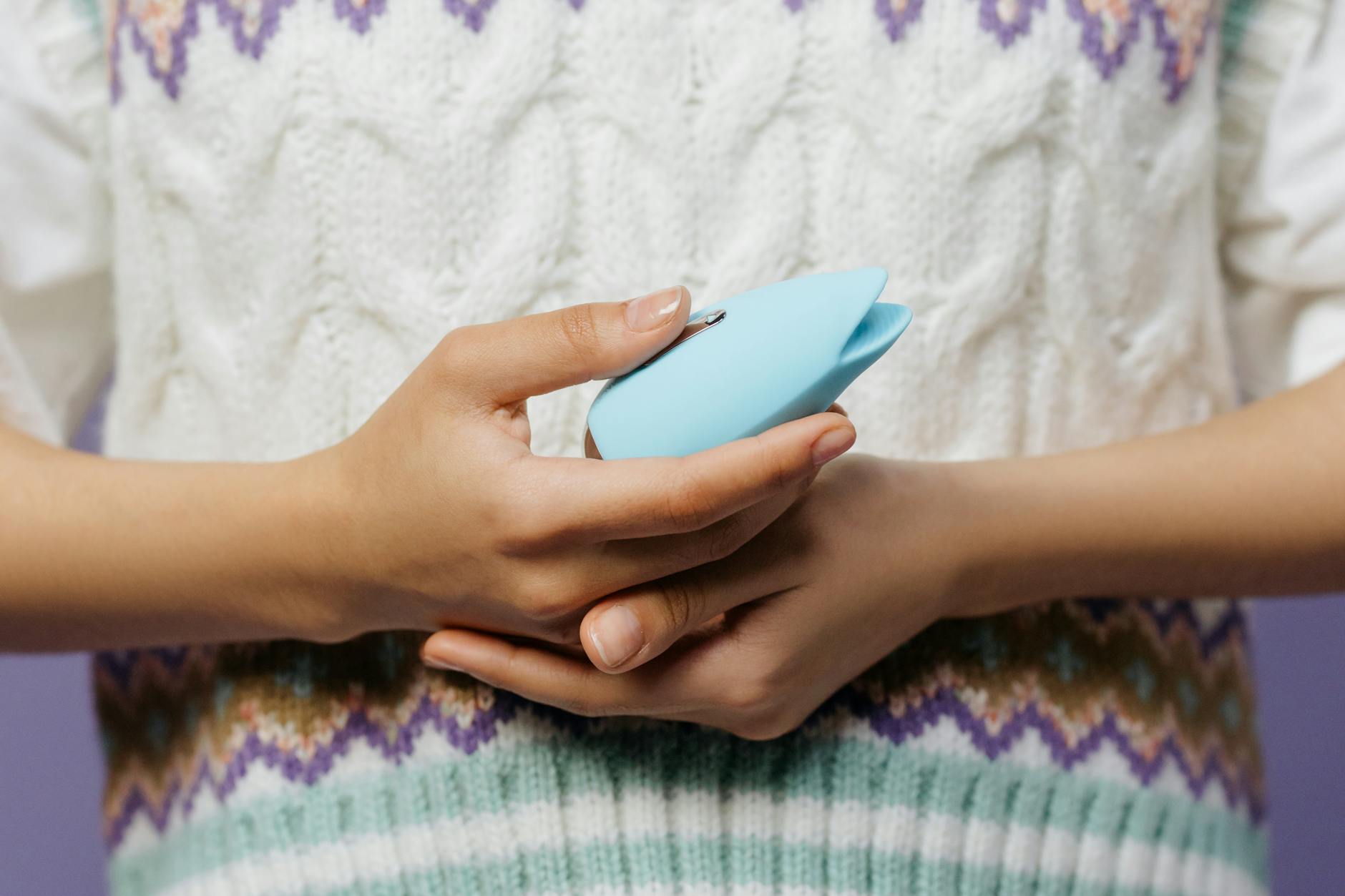
Let's start with the honest part
One of you wants the vibrator on level 7. The other person is wincing at level 3. This is one of the least talked about friction points in partnered sexuality, but it's everywhere. Sensory thresholds aren't a character flaw or a sign of incompatibility. They're just different operating systems, and lemon vibrators can work beautifully for both of you once you stop treating it like a negotiation and start treating it like useful information.
Why sensory preferences diverge
It's not random. Nerves vary wildly from person to person. Some people have denser nerve clustering in the clitoris, which means subtle vibration registers as plenty. Others have sparser nerve distribution and need more intensity to feel anything. Then there's anxiety. If you approach vibration in a tense state, even moderate vibration can feel jarring. Temperature regulation matters too. Warm bodies tend to feel sensation more acutely than cool ones.
Medication plays a huge role nobody mentions. SSRIs can dull sensation for some people while heightening it for others. Blood pressure medication does something similar. Hormone fluctuations across the cycle shift sensitivity by 30 to 40 percent. And then there's just plain neurology. Some brains filter sensation aggressively; others amplify it. This isn't about willpower or relaxation. It's about wiring.
The critical thing: neither threshold is wrong. "I need more" and "that's too much" are equally valid data points about how bodies work.
The conversation that has to happen first
Honestly though, most couples never have this conversation at all. One person just uses the toy alone, or you find a compromise intensity that leaves both of you slightly unsatisfied. Neither works long-term.
Here's what to say: "I want us both to feel good, which means figuring out how we use vibration together without either of us scaling back for the other. Can we treat this like a puzzle instead of a problem?"
The goal isn't meeting in the middle. It's finding configurations where you're both getting what you actually want. That might mean different things at different times. That's fine.
Configuration 1: Solo vibration, partnered touch
This is the most practical starting point. One person holds the lemon clitoral vibrator at their own chosen intensity, while the other partner provides manual stimulation elsewhere. Penetration, hand work on the vulva, kissing, nipple attention. The vibrator is doing one focused job; the partner is doing something else entirely. This completely eliminates the "but I can't feel you" tension that happens when a toy is doing all the work.
The person not holding the vibrator gets real tactile feedback and stays genuinely engaged rather than watching. The person with the toy maintains their own intensity and doesn't have to censor themselves. A lemon vibrator works particularly well here because the handle is ergonomic and stays stable without constant gripping, which means the partner's hands are free for other things.
Configuration 2: Rotation and rhythm control
If you both want the toy on the same person, try this: one partner uses it for 2 to 3 minutes at their preferred intensity, then you switch positions or the partner takes over the device for a bit. This gives you both control windows rather than forcing one person to manage intensity the entire time.
Alternatively, the partner who prefers lower intensity can hold the toy but set it to level 2, while the other partner provides pressure and rhythm through movement or hand contact. The vibrator becomes a layer, not the whole experience. Many couples find this reveals sensations they couldn't feel when the toy was set too high.
Configuration 3: Paired toys, different intensity
You don't have to share a single vibrator. Lemon Sucker makes more than one lemon clitoral vibrator, and having your own toy means each of you controls your own intensity. You're both experiencing vibration, but not forced to agree on settings. Some couples find simultaneous solo vibration extraordinarily intimate because you're building pleasure together without negotiating sensation the whole time.
The key difference from vibrating separately: you're present, watching, touching, communicating. The toy just handles the vibration layer.
Timing and position matter more than you think
Sensory thresholds shift throughout a cycle. The three days before ovulation, most people tolerate (and want) more intense vibration. Mid-cycle, subtle settings can feel extremely pleasurable. After ovulation, sensation dulls and intensity feels needed again. Pregnancy resets thresholds entirely. Perimenopause makes them unpredictable.
Position changes intensity perception too. Lying on your back, sensation travels differently than on your side or standing. Pelvic floor tension affects how vibration registers. If the receiving partner is gripping the pelvic floor, everything feels more intense and sometimes painful. If they're actively relaxing during vibration, the same toy at the same setting suddenly feels completely different.
This means what "doesn't work" at 8 p.m. might work great at a different time of month in a different position. Stop assuming the configuration is the problem and stay curious about context.
The communication pattern that actually works
Forget "is this okay?" feedback loops. That creates performance pressure and kills pleasure. Instead, use a check-in approach after you finish: "That felt good here, less good there" is way more useful than yes-or-no binary in the moment.
Better: "I want to try it on level 4 this time," or "Can you hold it at this angle instead?" During, that directiveness matters way more than constant affirmation. People know what they want. Let them say it.
One thing I've observed clinically is that couples with very different sensory preferences often have the best communication overall because they can't rely on assumptions. They have to talk. And that talking typically spills over into other parts of the relationship in really positive ways.
When to call in outside help
If one partner has history of trauma, extreme sensory processing sensitivity, or significant anxiety around touch, vibration intensity isn't really the core issue. The intensity is just where the tension lands. Working with a sex therapist or somatic practitioner before trying to solve the toy situation usually helps more than any configuration change.
If one partner's preference feels like withholding pleasure or avoiding intimacy, that's worth examining too. Sometimes "I don't like intense vibration" actually means "I don't feel safe with this toy" or "I'm not ready to be this vulnerable." Those are real things that need attention, not workarounds.
The three-month experiment
Here's what I recommend: pick one configuration and commit to it for three full cycles (or three months if you're not menstruating). This gives sensory thresholds time to settle and patterns to emerge. After that period, check in: "Did this actually work for both of us, or do we need to adjust?"
Most couples find that once they stop fighting their different thresholds and start using them as useful data, everything gets easier. The person who wanted more intensity gets to feel what they actually need. The person who needed less gets to enjoy vibration instead of endure it. And you're both touching each other the whole time, which is usually the point anyway.
FAQ
Can I use lemon sexual toys if my partner finds vibration overwhelming?
Absolutely. The configuration matters more than the toy. Solo use with your partner present, partnered manual touch with vibration as a layer, rotation models, or separate toys all work. You're not choosing between your pleasure and intimacy. You're finding a setup where both happen.
What if my partner thinks I need too much intensity to orgasm?
That's a story, not a fact. Needing strong vibration is not a problem to solve or a sign something is wrong. It's just how your nervous system is wired. Some people climax easily on lower settings; others need serious intensity. Neither is broken. Once your partner stops framing this as a deficit and starts seeing it as data about your body, the dynamic usually shifts.
Is it normal for sensory preferences to change during my cycle?
Completely normal. Estrogen and progesterone regulate nerve sensitivity. Days before ovulation, when estrogen peaks, most people want stronger sensation. After ovulation, as progesterone rises, sensation dulls. This isn't random or emotional. It's physiological. Track it for three months and you'll see the pattern.
Should we always use the same toy together?
Not necessarily. Paired toys at different intensities eliminate compromise entirely. Some couples love this. Others find the intimacy of sharing one toy and negotiating settings actually deepens connection. Try both and see what sticks.
What if we can never find a compromise?
You're not looking for compromise. You're looking for a setup where you're not both scaling back. Solo vibration with partnered touch, rotation models, or separate lemon clitoral vibrators all solve this. The goal is pleasure, not agreement on settings.
How do I tell my partner their preferred intensity feels too much without hurting feelings?
Stick to your body, not their choice. "When it's on level 7, my body tenses up, so I feel less instead of more" is about physiology. "You're setting it too high" is about judgment. One opens a conversation; the other closes it. Information beats criticism every time.
The real thing here
Sensory mismatch in couples isn't a relationship problem masquerading as a technical one. It's actually an opportunity. When you stop treating different thresholds as something to fix and start treating them as useful information about how both your bodies work, you get to build a sexual dynamic that actually fits both of you instead of both of you adjusting downward.
Get curious. Communicate clearly. Try different configurations. And remember: the whole point of using a lemon vibrator together is to feel good, not to prove you're compatible. You already are. You're just learning the mechanics.
If you want to dig deeper into how sensory preferences show up in relationships, reach out and let's talk about what's actually happening for you.