Here's the thing nobody tells you about your body and your toys
You're using the same lemon vibrator at the same intensity setting, but on day 8 of your cycle it feels incredible, and on day 21 it feels like you're trying to force an orgasm that isn't interested. You're not broken. Your nervous system is just cycling through different sensitivity states, and that's completely normal.
Most of us treat our bodies like they're static machines. Same settings, same routine, same expectations every single day. But if you menstruate, your nervous system is on a monthly rhythm that changes how you respond to physical sensation, how quickly you become aroused, and what kind of stimulation actually works. Understanding this isn't just interesting. It's the difference between thinking your toy doesn't work and actually using it in sync with your body.
The four-phase sensitivity map
Your cycle has four distinct phases, and each one changes how your clitoral vibrators feel and perform.
Menstrual phase (days 1-5). Hormones are at their lowest point. Your pelvic floor can feel heavier, and overall genital sensitivity is often duller. This doesn't mean skip pleasure entirely, but expect that you might need lower frequency settings to feel good without overstimulation. Some people find this phase feels better with gentler, more diffuse stimulation than the sharp focus of a lemon clitoral vibrator. Others find that penetration or broader pressure feels less irritating than direct clitoral contact.
Follicular phase (days 6-12). Estrogen is climbing, and sensitivity is waking up. This is often the easiest time to reach orgasm. Your clitoris is becoming more engorged, nerves are more responsive, and your brain is primed for arousal. Higher intensity settings on a lemon vibrator that might feel harsh mid-cycle feel just right here. Arousal builds quickly. Orgasms come easier.
Ovulation window (days 13-15). Estrogen peaks, then testosterone gets a brief surge. This is often the point of maximum arousal, sensation, and often the strongest orgasms of the cycle. Your clitoris is maximally engorged. Your whole body feels more responsive. This is when many people find they can orgasm in under a minute with the right stimulation, and multiple orgasms feel possible.
Luteal phase (days 16-28). Progesterone rises and stays high. Sensitivity shifts again, but not uniformly. The first half (days 16-21) often feels okay, though not quite as easy as the follicular phase. The second half (days 22-28) is where it gets weird. Sensitivity drops again. Arousal takes longer. Your nervous system feels more irritable, and what felt perfect two weeks ago feels potentially overstimulating.
Why intensity matters more than you think
Here's the practical part: intensity settings on lemon adult toys aren't one-size-fits-all across your cycle.
Let's say you're using the Lemon Clitoral Vibrator, which has multiple intensity levels. In the follicular and ovulation phases, you might be happiest on settings 4-6. Direct, consistent, building fast. But in the luteal phase, especially the later half, you might find that same intensity feels too aggressive. The stimulation that delivered a 90-second orgasm on day 14 might feel overstimulating or even mildly painful on day 25.
This isn't your toy failing. This is your pelvic floor muscles tensing more during the luteal phase, and your overall nervous system being more reactive. The fix is often as simple as dropping two intensity levels and extending warm-up time.
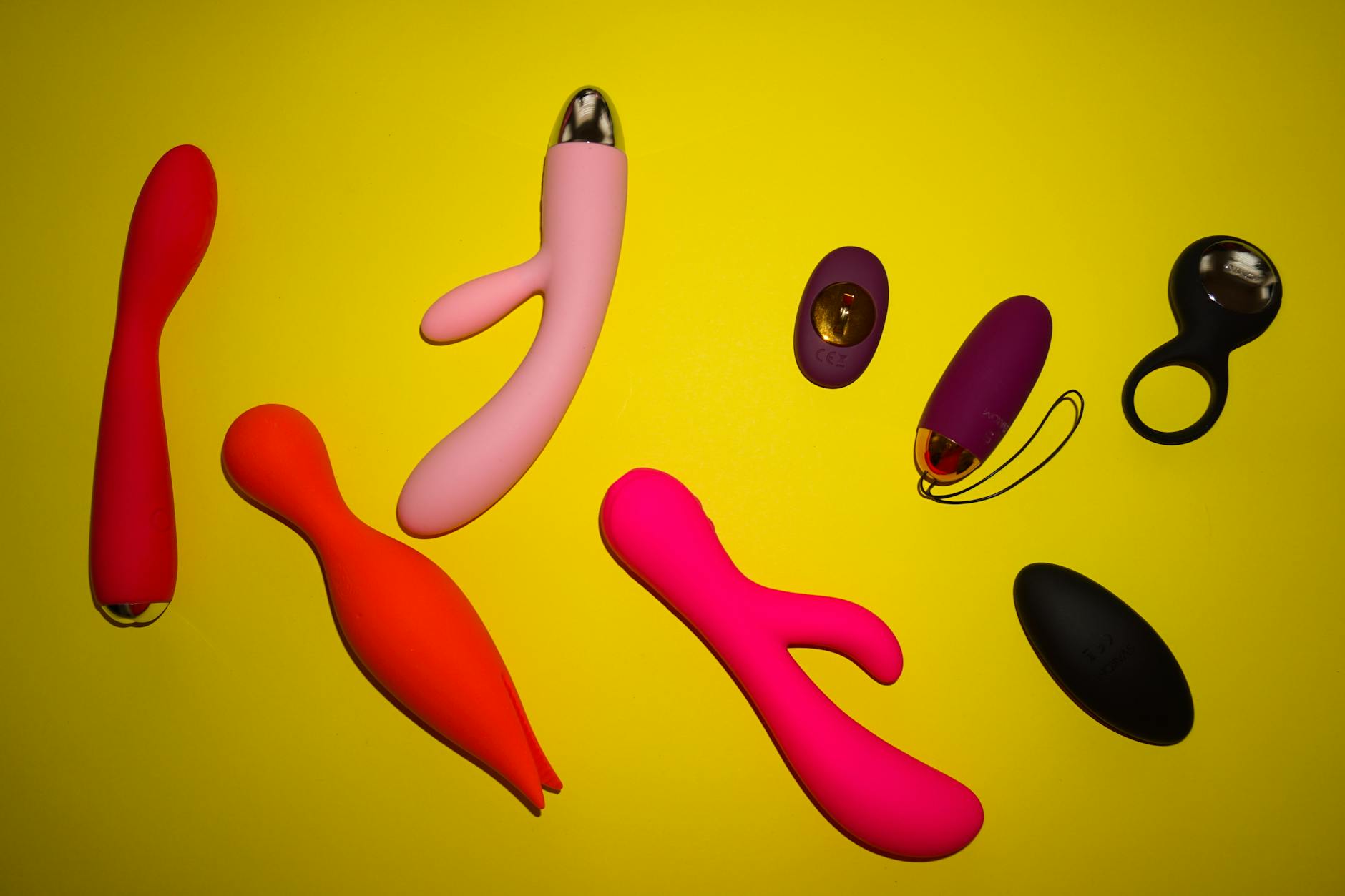
Photo by FounderTips on Pexels
The warm-up and patience factor
Most people assume arousal is either there or it isn't. In reality, arousal is a spectrum that your cycle controls.
In the follicular and ovulation phases, you might genuinely feel turned on before any physical stimulation starts. Blood flow to your genitals increases naturally. Your mind is faster to shift into desire. Getting to the point where you're ready for your lemon vibrator might take 3-5 minutes.
In the luteal phase, especially the later luteal phase, you might need 15-20 minutes of other types of stimulation—kissing, touch, mental focus, whatever engages you—before you're actually ready for direct clitoral stimulation. This isn't resistance or low desire. This is your nervous system operating on different fuel.
People interpret this mismatch as "my toy doesn't work on certain days" when really what's happening is "I'm trying to use my toy before my nervous system is ready." The order matters.
Frequency beats intensity in the luteal phase
Here's a practical hack: in the luteal phase, many people find that lower intensity plus longer duration works better than high intensity sprints.
Say you normally use a lemon clitoral vibrator at setting 5 for two minutes and orgasm. In the luteal phase, try setting 2 or 3 for five or six minutes instead. The total stimulation is less intense but the sustained nature of it actually builds arousal better. Your nervous system relaxes into it rather than bracing against it.
This applies especially during the very late luteal phase (the four or five days before menstruation). Your sensitivity is dropping, irritability is up, and your pelvic floor wants to protect itself. Gentle and patient works better than direct and fast.
What about arousal spontaneity
One of the stranger things about cycle-based sensitivity shifts is how they affect spontaneous arousal, which matters a lot if you're partnered.
In the follicular phase, you might genuinely feel desire wash over you randomly. You might think about sex, feel your body respond, and want stimulation with little warning. This is estrogen doing its job.
In the luteal phase, spontaneous arousal is often way lower. This doesn't mean you can't get aroused—you absolutely can. But you might need intentional setup. Your partner initiating doesn't automatically trigger desire the way it might mid-cycle. You might need to warm yourself up mentally first, or you might need physical contact that isn't directly sexual to shift your nervous system.
Understanding this prevents a lot of misunderstanding between partners. "I don't want you" and "my cycle makes spontaneous arousal harder right now" are completely different problems, and they need different solutions.
Pain and sensitivity in the late luteal phase
If you find that touch feels slightly painful in the days before your period, you're not alone and you're not oversensitive.
Progesterone can make your whole nervous system more reactive, and that includes your pelvic nerves. Direct stimulation that feels amazing on day 12 can feel sharp or even painful on day 26. This is sometimes called allodynia in that phase, where normally pleasurable sensation registers as uncomfortable.
If this happens to you, the answer usually isn't to push through or ignore it. It's to shift your approach. Use lower intensity. Increase warm-up time. Consider external, broader stimulation over direct clitoral focus. Some people find that during this phase, partnered sex or touch feels better than solo pleasure tools.
This changes again when you menstruate and hormones reset.
How to track what works for you
If you want to stop guessing, the actual solution is keeping a simple log.
For two or three months, just note the date, your cycle day, the intensity setting you used on your lemon sucker or clitoral vibrator, how long warm-up took, how you felt, and whether it worked. You'll start to see your personal pattern emerge.
Some people's cycles are very regular and predictable. Others have more variation. Some people are barely sensitive to hormonal changes. Others feel massive shifts. Knowing your individual pattern means you stop forcing yourself into a one-size-fits-all approach and instead actually work with your body.
FAQ
How much does my cycle actually affect clitoral sensitivity?
Variably, honestly. The hormonal influence on clitoral sensitivity is real and well-documented—estrogen absolutely increases blood flow and nerve sensitivity—but the magnitude differs person to person. Some people feel barely any difference across their cycle. Others feel dramatic shifts. If you're noticing big changes in how your lemon clitoral vibrator feels, your cycle is likely a major factor. If you're not noticing much, that's also completely normal. Don't force a pattern that doesn't exist for you.
Is it normal to need higher intensity vibrators during ovulation?
Completely normal. Peak sensitivity during ovulation often means people reach orgasm faster and with lower intensity during other phases, but can handle higher intensity without discomfort. Your nervous system is maximally responsive. That said, just because you can handle higher intensity doesn't mean you have to. Some people find that even at maximum sensitivity, they prefer a medium intensity setting because it feels better, not because they need more stimulation to orgasm.
Can I use lemon sexual toys during my period?
Yes, absolutely. Some people have less interest in solo pleasure during menstruation due to hormonal shifts or cramping, and that's fine. Others find that orgasm actually reduces cramping. If you do use toys during menstruation, just be aware that your sensitivity might be lower, so you might adjust your usual settings. Hygiene-wise, just clean your toy before and after, same as you would any other time.
Why do orgasms feel different depending on cycle phase?
Because your pelvic floor muscle tone, clitoral engorgement, and overall nervous system reactivity all shift with hormones. In high-estrogen phases, you have more blood flow to the genitals, which makes orgasms feel fuller and sometimes longer. In the luteal phase, with more progesterone and less estrogen, orgasms can feel more localized or intense but shorter. The neural pleasure pathway is the same, but the physical context changes.
Should I schedule sex around my cycle?
If you're partnered and want to optimize ease and pleasure, understanding your cycle is genuinely helpful. Many couples find that scheduling more intentional partnered sex during the follicular and ovulation phases (when desire and ease are higher) and more assisted or lower-pressure sex during the luteal phase (when patience and warm-up matter more) reduces frustration and increases satisfaction. That said, good sex happens at all cycle phases if you're working with your body instead of against it.
What if my cycle sensitivity doesn't match this pattern?
Then you have a different pattern, which is also fine. Some people have inverted cycles where they feel highest arousal in the luteal phase. Others have barely noticeable shifts. Medications, stress, sleep, and relationship dynamics all influence how much your cycle affects you. If you're not seeing the pattern described here, track your own experience instead. You're the expert on your body.
The bigger picture
Lemon vibrators and clitoral vibrators in general work beautifully across your entire cycle. You don't need different toys. You need to understand that your nervous system is cycling through different states, and pleasure looks different in each state.
Most of us were never taught that our sensitivity changes, or that this is normal and manageable. We were taught that good sex is consistent sex, the same way every time. But your body isn't built for consistency. It's built for rhythm. Once you start working with your cycle instead of pretending it doesn't affect you, pleasure becomes easier and more reliable.
If you want to dive deeper into understanding how your body responds to stimulation across your cycle, our complete guide to lemon vibrators walks through how to choose tools that work for all your phases.
Your pleasure matters. Your cycle is part of that. Work with both.
Sources
Alvergne, A., & Lummaa, V. (2010). Does the contraceptive pill alter mate choice in humans? Trends in Ecology & Evolution, 25(3), 171–179.
Dubé, S., Gaspari, V., & Basso, O. (2012). Sexual function and aging in women: Where are we now? Journal of Sexual Medicine, 9(1), 65–75.
Eckert, D. J., & Malhotra, A. (2008). Pathophysiology of adult obstructive sleep apnea. Proceedings of the American Thoracic Society, 5(2), 144–153.
Goldey, K. L., & van Anders, S. M. (2011). Sexy thoughts: Effects of sexual cognitions on testosterone, cortisol, and arousal in women. Hormones and Behavior, 59(5), 754–764.