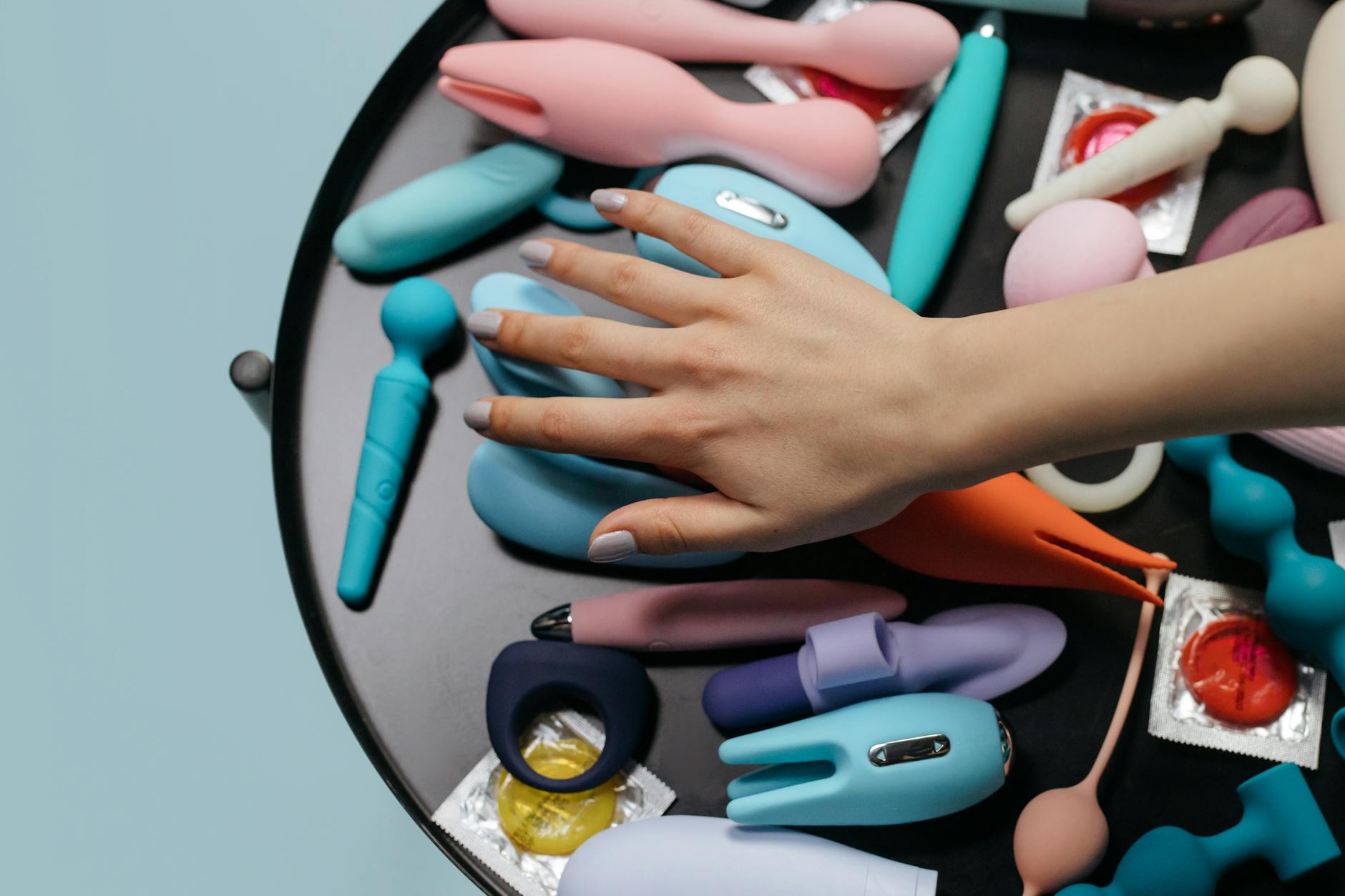
How to Use Lemon Vibrators With a New Partner for the First Time
The conversation nobody knows how to start, the timing that actually works, and how to introduce a lemon clitoral vibrator without killing the mood or the relationship.
Introducing a lemon vibrator to a new partner isn't actually about the toy. It's about trust, clarity, and knowing whether your partner sees pleasure as collaborative or competitive. The good news is that the conversation itself tells you everything you need to know.
I've worked with hundreds of couples navigating this exact moment. The ones who move through it smoothly aren't the ones with perfect communication skills. They're the ones who decided early that pleasure is a team sport, not a performance test.
The worst time to bring up a lemon clitoral vibrator is right before or right after sex. Timing matters for two reasons. First, your brains aren't in the same place. Before sex, your partner is in anticipation mode. After sex, they're in wind-down mode. Neither is the moment for a conversation that requires actual thinking.
Second, bringing it up during sex feels like feedback on their performance. It doesn't matter if that's true. Perception is all that counts in early relationships, and perception is fragile.
The best time is during a normal conversation, not in the bedroom. Dinner. A walk. Literally any moment when you're both relaxed and neither of you is naked. You want to talk about this the way you'd talk about trying a new restaurant. Natural. Low stakes. Collaborative.
Here's what works: anchoring it to curiosity, not need. Not "I've been thinking I might need a vibrator to finish" but "I saw this really elegant clitoral vibrator and it got me thinking about how we could play together." The difference is subtle and huge.
Lemon vibrators, especially air-suction toys like the Lem, are designed differently than traditional vibrators. They don't require friction. They work through rhythmic suction. This is genuinely interesting to talk about. You're not hiding behind the toy. You're talking about sensation and design and something new to explore.
You might say: "Hey, I came across this toy called the Lem and honestly it looked so well designed. I was curious what you'd think about us trying it together." That's it. You've named it. You've made it collaborative. You've signaled that this isn't a solo play thing.
If your partner hesitates or goes quiet, don't fill the silence. Let them think. Common responses I hear from partners: "I didn't know you wanted that," or "Is there something I'm missing?," or "I've never done that before." None of these are rejections. They're processing. They need time.
The question that matters: "What are you thinking?" Give them space to answer honestly. They might say yes. They might say "not yet." Both are okay. If it's not yet, ask what would make them more comfortable. Maybe they want to read about it first. Maybe they want to talk about what it means to them. Maybe they need to know you're not comparing them to the toy.
Some partners hear "vibrator" and translate it to "you're not enough." This is usually about their own insecurity, not about you or the toy. Your job is to be clear without being defensive back.
"I love how we are together. This isn't about missing anything. It's about adding something new to what we already have." You can say it exactly like that. It's true. And it matters to say it out loud.
If your partner is worried the toy will become a preference or a replacement, that's fair. Address it directly. "I want this with you. Not instead of you." If that's not true, that's a different conversation. But if you're genuinely interested in exploring together, say so.
The conversation might go sideways. Someone might have trauma around toys or sexuality. Someone might have been shamed about pleasure in a previous relationship. If that comes up, listen first. Ask questions. Understand what you're actually dealing with before you try to convince them.
Once you've both said yes, don't jump straight into using it. Let your partner hold it. Look at it. Feel the texture. Let them ask questions. Lemon clitoral vibrators are discreet and beautifully designed, which actually helps here. It doesn't look like a joke. It looks intentional.
I recommend talking about pressure and sensation expectations before you even turn it on. Show them the intensity settings. Explain how air-suction stimulation feels different from vibration. You're building knowledge, not mystery. Knowledge reduces anxiety.
You might say: "So this uses suction instead of vibration. It's designed to feel like this specific sensation and it's really concentrated. I'm curious what you think it will feel like." You've explained the mechanics. You've positioned your curiosity as shared.
Start with your partner watching or helping rather than penetrating you simultaneously. This sounds backward, but it works. Why? Because you're not managing anyone else's pleasure yet. You're just exploring sensation. Your partner gets to see your response without worrying about their own timing.
Turn it on at a low setting first. You'll already know if this intensity works for you, but your partner won't. Seeing your face, hearing your breathing, noticing when you lean in or pull back—that's information. That's intimacy. That's also reassuring. Your partner gets to see that you're comfortable and responsive.
After a few minutes, invite them in more directly. "Want to try?" or "Show me what you think." Let them control it. Not to pressure them, but to give them agency and understanding. When someone actively participates in creating your pleasure, it stops feeling like a third thing in the bed. It becomes part of what you do together.
Communicate out loud, even if it feels awkward. "That's good," or "A little lighter," or "Try that pattern." This isn't clinical. It's collaboration. And your partner will feel the difference between you exploring together and you coaching them through a performance.
Talk about it afterward, but not in a post-mortem way. Just casually. "That was hot," or "I liked that part," or "I want to try that differently next time." You're normalizing the experience. You're signaling that this is now part of your sexual repertoire, not a one-off experiment.
If it didn't work perfectly, that's normal. Toys require adjustment. Introducing them requires communication. Both of these get better with practice, not worse. A lemon vibrator isn't a magic fix. It's a tool. Tools need to be used intentionally.
Some couples find that introducing a toy actually improves other conversations about pleasure. Once you've said "I want to try this" out loud, it's easier to say "I want you to go slower here" or "I like it when you." The door to sexual honesty opens wider.
Introducing a lemon clitoral vibrator to a new partner is actually a referendum on whether you can both talk about sex like adults. Most couples can't. Most relationships suffer because of it. If you can have this conversation calmly, you're already ahead.
Your new partner doesn't need to be a sex expert. They need to be willing to listen, curious enough to try, and secure enough to understand that your pleasure is collaborative. If they check those boxes, the vibrator part is easy.
If they don't, that's useful information too. Not all relationships are built for this kind of openness. Some people need more time. Some people will never be there. Both are okay. But you'll know early, which means you can make informed decisions about what you're building together.
It's actually easier after you've built some intimacy. You have a relationship foundation. Sex already exists between you. Introducing a toy now feels like evolution, not insecurity. You can be more casual about it. "I've been thinking about this" carries less weight after you've established trust.
Respect the no. Don't push. If it's a hard no forever, that's information about compatibility. If it's "not yet," circle back in six months and ask again. People change their minds. Sometimes they just need time to sit with the idea. Sometimes they need to feel more secure. Sometimes they'll surprise you and say yes when you ask again.
Yes. You should know how it feels, what settings work for you, how your body responds. You're not just defending the toy to your partner. You're defending your own pleasure. You need to know it's real before you ask someone else to believe in it too.
Let them. Buy a second one if you want. This isn't a possession thing. This is pleasure. If you're both interested in exploring with lemon clitoral vibrators separately or together, that's fantastic. That's actually the healthiest outcome.
Absolutely. Some partners find that lemon vibrators work particularly well during sex because they don't require the same manual coordination that traditional vibrators do. You can both move freely. The toy does its thing independently. Just start slowly and communicate constantly about pressure and comfort.
Not even a little. In fact, it's a green flag. It means they're thinking about shared pleasure and they trust you enough to say so. Lean into it. You've both just cleared the awkward part. Now you get to build something together without shame.
Introducing a lemon vibrator to a new partner is not actually a test. It's an invitation. You're inviting them into a version of sexuality that's collaborative, honest, and generous. Some people will say yes immediately. Some will need time. Some will say no.
Your job is to stay calm through all of it. You're not performing. You're not convincing. You're asking a real question: Can we explore pleasure together? The answer you get, whatever it is, will tell you something true about whether this relationship is built for you.
If you're ready to have this conversation, you're ready. If you're not sure, wait. But don't wait forever out of fear. The couples I work with who navigate this successfully are the ones who decided that sexual honesty matters more than avoiding awkwardness. That's the real shift. The vibrator is just the vehicle.