Let's start with the honest part
Breakup sex ends. That's the point. But your body's right to pleasure doesn't end with it. Here's what usually happens instead: guilt arrives first. The thought that touching yourself feels like infidelity (it doesn't). That wanting pleasure feels selfish (it's not). That you should grieve by being numb for a while (you absolutely shouldn't).
I've worked with hundreds of people rebuilding after a breakup, and almost every single one goes through this same negotiation with their own body. The ones who move through heartbreak fastest aren't the ones who white-knuckle their way through celibacy. They're the ones who decide early on that pleasure. Belongs. To. Them.
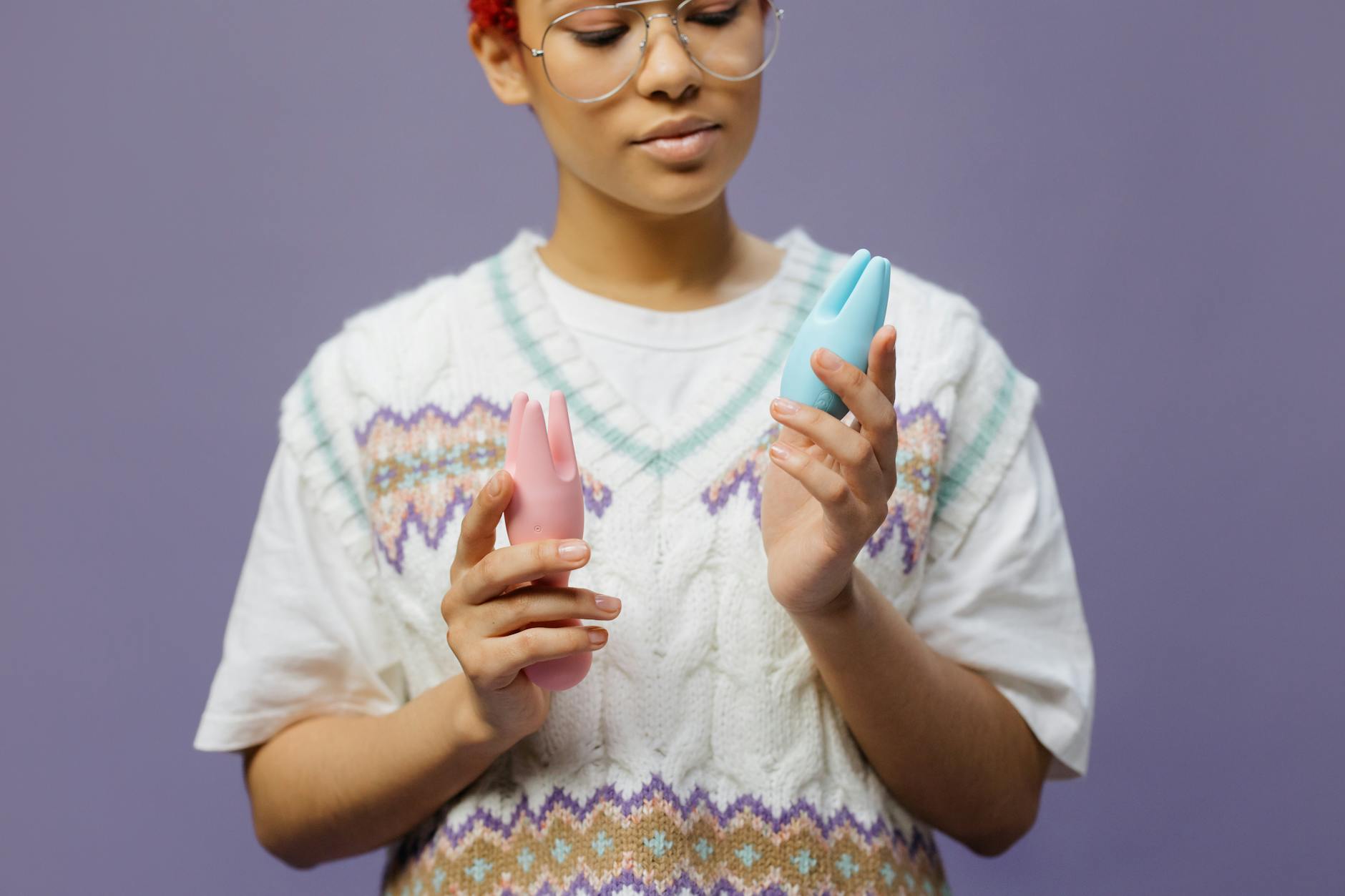
Lemon vibrators, specifically clitoral vibrators like those from Lemon Sucker, become part of that reclamation. Not as a replacement for a person, but as a direct line back to your own nervous system, your own consent, your own body. That shift changes everything.
Why pleasure right now isn't betrayal
One of the biggest myths about breakup recovery is that you're supposed to suffer first. Deny yourself. Prove the relationship mattered by entering a grief chamber where your body gets locked away. That's not healing. That's postponement dressed up as respect.
Your body never betrayed you. Your body wasn't the one that left, got defensive, or failed to show up. Your body was trying to survive the whole time. Touching yourself, seeking pleasure, using a lemon clitoral vibrator in the weeks and months after a breakup is one of the most honest things you can do. It says: I'm still here. My pleasure still exists. I matter.
There's real neuroscience backing this up. Orgasms release oxytocin and dopamine. After a breakup, your brain is flooded with stress hormones and withdrawal symptoms (the end of a relationship is chemically similar to withdrawal from cocaine, no exaggeration). Pleasure helps reset that. It doesn't erase the sadness, but it interrupts the loop just enough to let you think clearly.
And here's the thing nobody tells you: solo pleasure after a breakup often feels better than it did during the relationship. No one's watching. No one's rhythm to sync to. No guilt about their orgasm not happening. No performance. Just your body, your vibrator, and what you actually want.
The three phases of rebuilding
Most people move through three distinct phases after a breakup, and what works with lemon vibrators shifts at each stage.
Phase one: The numb phase (weeks 1-4). Your nervous system is flooded. Touch might feel overwhelming or completely deadened. Some people want nothing to do with pleasure; others use it as escape. Both are fine. If you're in the numb phase, start small. A few minutes with the Lem at the lowest setting, no pressure to orgasm. The goal is to confirm that sensation still exists, that you're still alive in your body.
Phase two: The processing phase (weeks 4-12). This is when feelings start moving. You might cry during sex with yourself. You might feel angry, then aroused, then both at once. This is the phase where many people start exploring their pleasure more deliberately, because the numbness is lifting and you're starting to reconnect with what your body actually wants. This is when most people say solo pleasure starts to feel healing rather than distracting.
Phase three: The reclamation phase (week 12 onwards). You stop thinking of solo pleasure as "getting over them" and start thinking of it as just... pleasure. Something that belongs to you, separate from the relationship entirely. The vibrator becomes a regular part of your life, like coffee or exercise. Unattached to grief or healing. Just there.
How to use lemon vibrators without guilt
Five shifts that make all the difference:
Start with intention, not escape. There's a difference between using a vibrator to numb pain and using it to feel something real. Before you touch yourself, pause. Ask: Am I trying to feel better in my body, or trying to disappear? Both are valid, but knowing which one helps you choose the right headspace. If it's escape, maybe a walk first. If it's reconnection, grab the Lem.
Create a physical boundary between you and the relationship. Some people say delete the photos first. Take off their hoodie. Change the sheets. I'm not here to tell you what your ritual should be, but something intentional helps your nervous system understand: this is a new container now. Your pleasure lives here. They don't.
Don't expect it to feel like before. Your body is different now. Your nervous system is processing grief. Arousal might take longer. Orgasms might feel less intense or weird in a new way. None of that means you're broken. It means you're in transition. That's actually a good time to use a clitoral vibrator like those from Lemon Sucker, because many people find that air-suction or gentle vibration helps sensation register when emotional numbing is high.
Set a boundary with fantasy too. Some people default to fantasizing about the ex during solo sex, especially early on. That's a grief loop, not pleasure. If you notice yourself going there, gently redirect. Think about someone else entirely, or no one. Think about how the vibration feels. Where you want to go next. Make it about what's happening to your body now, not what happened with them.
Remember that wanting pleasure doesn't mean you're over it. You can grieve and still have an orgasm. You can miss them and still touch yourself. You can do both at the same time. Most people do. Solo pleasure isn't proof you've moved on; it's proof you're choosing to stay alive while you heal.
When penetrative pleasure feels too vulnerable
Right after a breakup, the idea of anything inside you might feel like too much. Clitoral vibrators become valuable precisely for this reason. A lemon clitoral vibrator focuses entirely on external pleasure, on the clitoral complex, where many people find stimulation feels more straightforward, less emotionally loaded. You're not penetrated. Nothing is inside you. It's just external sensation, pure and simple.
If you need that boundary, that's smart self-awareness. Use it. Clitoral pleasure is complete pleasure. You don't need penetration to have a full, satisfying experience. Many people prefer it.
As time passes and your nervous system settles, you can reassess. You might find that penetration becomes appealing again, or it might not. Both are true pleasure.
The role of routine
This is where solo pleasure stops being about healing and starts being about reclamation. By the time you're three, four, five months out, adding lemon vibrators to your regular self-care routine (like exercise or skincare) removes the emotional weight. It becomes a normal part of your life. You're not using it to process grief anymore; you're using it because pleasure feels good and you deserve it.
Some people set a regular rhythm. Once or twice a week. Some use it as a stress relief when work gets heavy. Some only reach for it when they feel like it. The point is it stops being a crisis intervention and becomes a tool you own because you want to.
That shift, in my experience, is when most people know they're really moving through the breakup. Not because they stop missing the person. But because they've reclaimed the part of themselves that doesn't depend on that person's presence to feel whole.
When to reach out for more support
If weeks have passed and you feel completely numb, unable to access any pleasure, any desire, any feeling at all, that's worth talking to a therapist about. Depression after breakup is real and common, and solo pleasure might not be enough to move through it alone.
If you find yourself using solo pleasure as your only coping mechanism, replacing sleep or connection with others, that's also worth examining. Pleasure is part of recovery, but it's not all of it.
And if the grief is so heavy that thinking about pleasure feels obscene, that's valid too. There's no timeline. You're not supposed to want sex or pleasure immediately. Some people need weeks before they're ready. Some need months. Your pace is the right pace.
FAQ
How soon after a breakup is it okay to use a vibrator?
There's no universal timeline. Some people want to use clitoral vibrators within days; others need weeks or months. The question isn't really about time elapsed, but about your nervous system's readiness. If touching yourself feels like a natural way to reconnect with your body, that's soon enough. If it feels forced or like you're running from something, wait. Your body will tell you.
Will using a lemon vibrator after a breakup make me feel more alone?
Sometimes, yes, initially. Pleasure can bring up loneliness, because it reminds you that you were just with someone and now you're not. That's grief moving through you. It's not a sign that solo pleasure is bad. It's a sign that you're feeling something real. Let it move through. By the third or fourth time, most people find it shifts. Solo pleasure becomes less about what's missing and more about what they've reclaimed.
Can I use a lemon vibrator if I still love them?
Yes. Loving someone doesn't disappear because the relationship ended. You can grieve, love, miss them, and still have an orgasm. These aren't contradictory. One of the most honest things you can do is acknowledge that you can feel multiple things at once.
What if I feel ashamed about using vibrators solo?
That shame has a source, and it's usually not your own. You inherited it from somewhere. Religion, family stories, media, friends. The antidote isn't logic; it's evidence. Every time you use a clitoral vibrator and survive it, every time pleasure happens and nobody dies, every time you remember that your body belongs to you, that shame gets a little smaller. It doesn't usually disappear completely, but it stops running the show.
Is using a lemon vibrator right after a breakup too much too fast?
No. You're not replacing the person. You're reconnecting with yourself. That's the opposite of too much. That's exactly right.
How do I know if I'm using a vibrator as healthy reconnection versus unhealthy avoidance?
Ask yourself: am I touching myself to feel alive in my body, or to disappear from my feelings? Both might happen. But if it's mostly the second one, if you're reaching for the vibrator every time you feel sad without ever sitting with the sadness, that's worth noticing. Healthy reconnection includes feeling the grief too, not just escaping it. If you're not sure, talking to a therapist or trusted friend can help you untangle it.
You're allowed to want this
Breakup recovery isn't linear. You won't wake up one day and feel fine. But you also don't have to spend months pretending your body doesn't exist, doesn't want things, doesn't deserve pleasure. Using a lemon vibrator after a breakup isn't selfish or a sign you didn't care. It's proof that you're choosing yourself while you heal.
Your body is still yours. Your pleasure still belongs to you. That never changed.