
Here's the thing about new partners and pleasure
There's a specific kind of nervous energy that shows up when pleasure is on the table with someone you barely know. You're wondering if they'll think you're too much, not enough, weird, demanding. You're tracking their reactions. You're performing instead of feeling. And somewhere in that spiral, actual pleasure gets sidelined entirely.
I work with people who bring lemon vibrators into early intimacy all the time. What they tell me isn't "it made things weird." It's usually "it saved the whole experience." Not because the vibrator did the work for them, but because introducing it forced a conversation they desperately needed to have anyway.
Why a new partner changes the pleasure equation
You know your own body. You probably know what works, what doesn't, and what takes time to build. A new partner doesn't have that information. They're operating on assumption, generalization, or luck. Meanwhile, you're managing both your own arousal and their feelings about your arousal, which is approximately three things at once.
Add to that the specific anxiety of early dating: the fear of judgment, the desire to seem chill about sex when you're not actually chill, the impulse to hide anything that feels "too much." That's a lot of mental bandwidth. Your nervous system is halfway in fight mode before anything even starts.
Using a lemon clitoral vibrator changes the dynamic. It's not because the toy is magic. It's because introducing it requires you to say out loud: "I know what I like. I'm confident enough to ask for it. And I want you to be part of that." Those three things together build real intimacy faster than months of pretending to enjoy something that isn't working.
When to bring it up (and how)
Timing matters, but not in the way you think. You don't need to wait until you're already in bed. Actually, that's the worst time because then it feels like an in-the-moment criticism, and it becomes defensive instead of collaborative.
Bring it up somewhere neutral. During a conversation about pleasure, boundaries, or what you both like. "I know what gets me there with toys, and I'd love to use one with you" is a complete sentence. You're not asking permission. You're inviting participation.
Some partners will be relieved. Many are relieved. The pressure to be someone's entire pleasure experience is real and heavy, and a lemon vibrator takes that pressure off. It says: "I'm invested in my own pleasure, and I want you here while that happens."
If someone reacts badly to you knowing what you want and asking for it, that's information. Not about you. About them. And it's information you needed early.
How to actually use one together
There are two main approaches, and both work depending on what you want.
Integration: You're already engaged, things are heating up, and you reach for the lemon vibrator. It becomes part of the experience, not a substitution. Your partner can still touch you, still be involved. They're not displaced. If anything, they have more options for how to participate. Some partners love holding it. Some love the control of speed. Some just love that they get to watch you respond.
The key here is that nothing changes about what's happening except you're getting better stimulation. Everything else stays the same.
Parallel play: You use the vibrator, they do something else. Maybe they're focused on kissing you, or touching other parts of your body, or just present and close. This works particularly well if you've struggled to reach orgasm with new partners or if you know you need consistent stimulation to finish.
The emotional work here is the same either way: you're saying "I deserve to feel good, and I'm not waiting around for someone to figure it out by accident."
What to expect emotionally
Using a lemon sucker vibrator with someone new can feel exposing. You're literally showing them what you need. That's vulnerable. It's also hot, which sometimes surprises people.
Some partners get genuinely curious. They'll ask questions. "What feels different about this?" or "Can you show me the pattern you like?" Those conversations are foreplay. They're connection. They're exactly what early intimacy should feel like.
Others will mirror your confidence. If you're comfortable with your pleasure, they become comfortable with it too. Confidence is contagious.
There's a small chance someone will make it weird. They'll make it about them. "Why can't I do that?" or "Do you need that with everyone?" In those moments, you have information again. Someone who loves you wants you to feel good. Someone who's threatened by your pleasure wants control instead.
How lemon vibrators actually build trust
Here's what I tell my clients: you're not bonding around the toy. You're bonding around honesty. The vibrator is just the vehicle.
When you say "I like this" and your partner responds with curiosity instead of defensiveness, something shifts. You've proven to each other that pleasure is collaborative. That needs matter. That you can ask for what you want and not be punished for it.
That's the foundation of genuine intimacy. Not performance. Not pretending. Real knowing of each other.
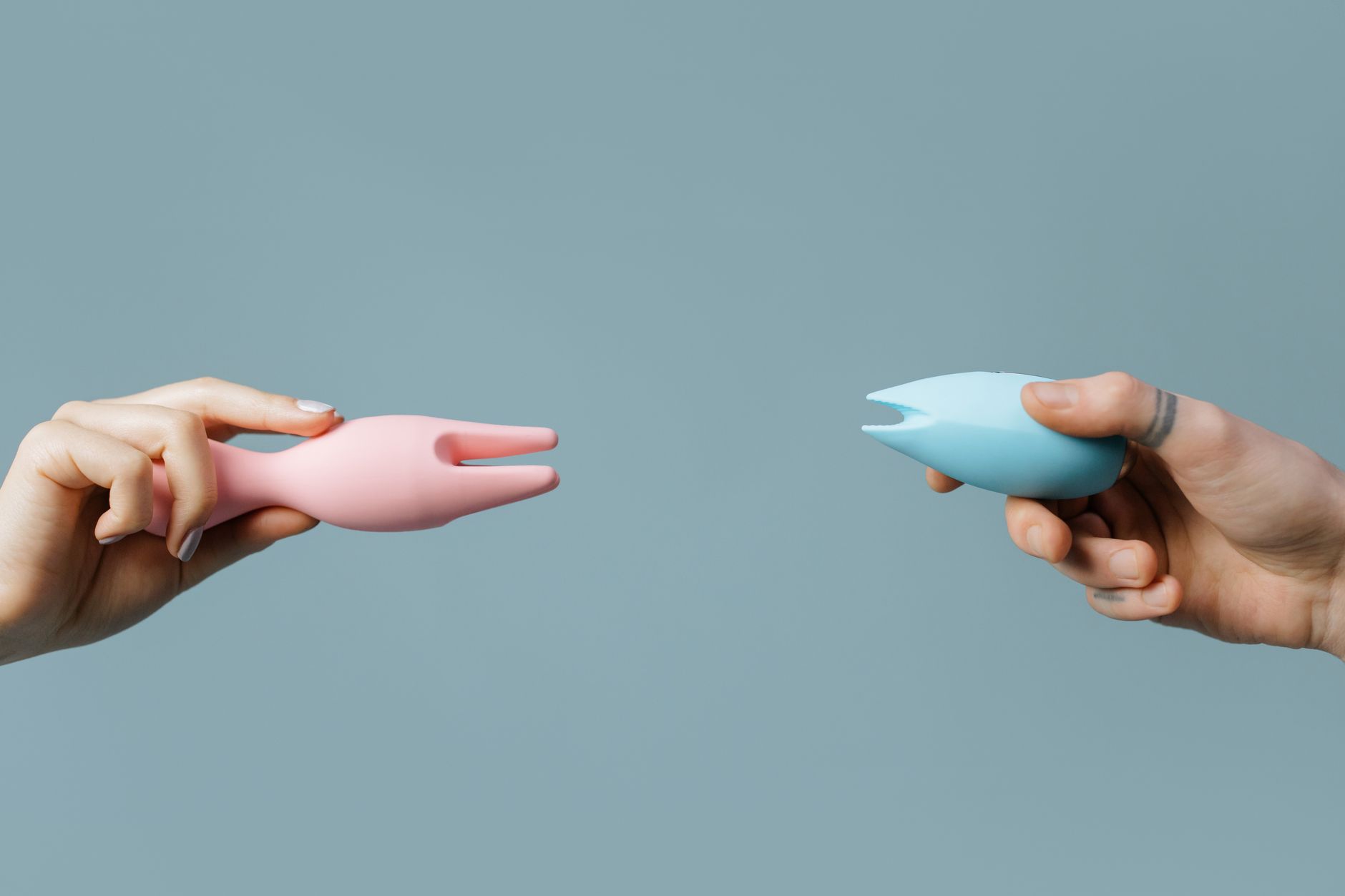
Photo by cottonbro studio on Pexels
Managing the comparison trap
Sometimes bringing a lemon clitoral vibrator into early intimacy triggers this: "What if they think I've only enjoyed sex with toys in previous relationships?" or "What if this means I'm incompatible with real touch?"
These thoughts are almost never based in reality. You know what they usually mean? Unhealed stuff from a previous relationship where you were made to feel bad for knowing what you wanted. That's not about this person. That's old data trying to predict a new situation.
If it comes up, the move is simple: "I've always used toys sometimes. It's part of how I experience pleasure. I want that to be okay with you." Clean, direct, no apologizing.
When sensation takes time to build
Sometimes new partners and new bodies trigger a specific problem: arousal is slower. Touch feels different. Your nervous system is still in assessment mode instead of relaxation mode. That's completely normal and completely temporary. Using a lemon vibrator actually speeds up the transition because you're moving toward pleasure instead of waiting for it to happen to you.
You're not compensating. You're taking an active role. And that changes your entire nervous system response. You become less vigilant and more present because you're directing the experience instead of receiving it.
The conversation after
Once you've used a lemon vibrator together, check in. Not in a clinical way. Just: "That felt good" or "I liked having you here" or "Let's do that again." You're establishing that this is normal, welcome, part of your intimate life.
If something didn't feel right, say that too. "The timing felt rushed" or "I want to focus more on us next time." You're continuing the conversation. That's the real work.
FAQ: New partners and lemon vibrators
What if my new partner thinks I'm comparing them to the vibrator?
They might think that initially. That's why the conversation before matters. "This isn't about replacing you. It's about me knowing what I want and inviting you into that." If they're secure, they'll get it. If they're not, that's data about compatibility.
Is it weird to use a lemon vibrator on a first sexual experience together?
Not weird. Honest. You're saying "I want to feel good and I trust you enough to show you how." That's healthy. That's confidence. Some people find it incredibly hot because you're clearly comfortable with pleasure.
How do I know if my partner is actually okay with it or just pretending?
Watch their body language. Are they curious? Do they ask questions? Do they engage? Or are they quiet and withdrawn? You'll feel the difference. If something seems off, you can always pause and ask: "Are you actually into this or is this uncomfortable?" Direct questions get honest answers.
What if my partner wants to use the lemon vibrator on me but I prefer to use it myself?
Then you say that. "I like having control over the sensation, but I love that you're here watching" or "Can you handle the toy while I focus on you?" You're negotiating what feels good. That's the whole point.
Should I let them use a clitoral vibrator on me without asking how?
No. Different sensations, different angles, different pressure levels. Tell them what feels good. Show them if you need to. You're collaborating, not surrendering control.
Does using a lemon sucker vibrator mean I won't enjoy sex without one?
No. It means you've learned what specific stimulation feels good and you're confident enough to ask for it. That's actually the opposite of dependency. That's knowledge.
The bottom line
Bringing a lemon clitoral vibrator into a new relationship isn't a risk to intimacy. It's a foundation for it. You're saying: I know myself. I trust you. And I want us to build something real together. That conversation, in all its vulnerable honesty, is where actual connection begins. The vibrator is just the thing that makes you brave enough to have it.
If you're feeling stuck in communication with a new partner, remember that pleasure conversations are just regular conversations with higher stakes. You've got this.