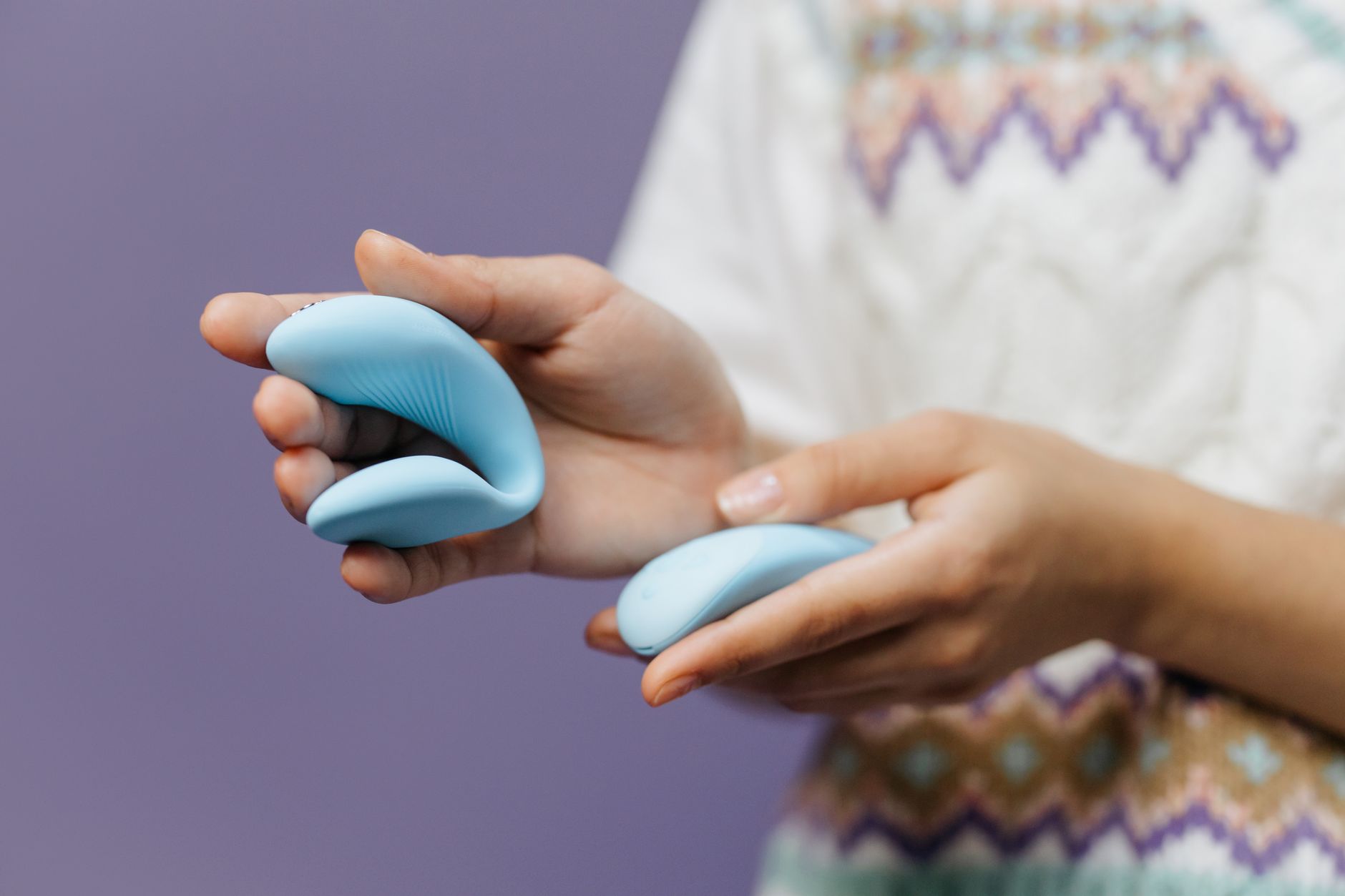
When pleasure goes quiet
One of the hardest things about hormonal shifts is that they don't announce themselves. You don't wake up one day thinking, "Today my estrogen drops and everything changes." Instead, you notice that touching yourself feels like you're touching someone else's body. Pleasure that used to build in minutes now takes twenty. Sometimes it doesn't come at all. And the worst part? Nobody tells you this is temporary, or that there are actual tools that can help you reconnect.
I've worked with dozens of people going through perimenopause, post-menopause, or other hormonal transitions who describe this exact sensation: the pleasure is still there somewhere, but it feels like it's behind glass. They can see it, but they can't quite reach it. That's not a psychological problem. It's a physiological one. And it responds really well to the right approach.
What hormonal changes actually do to sensation
Let's be clear about the mechanics first. Estrogen doesn't create pleasure, but it does create the conditions for it. Lower estrogen means thinner, less elastic tissue in the vulva. Blood flow to the clitoris decreases, which slows down the arousal response. The clitoral glans becomes less engorged, so it takes longer and more direct stimulation to trigger that chain reaction in your nervous system that leads to orgasm.
There's also a neurological piece people don't talk about enough. Estrogen helps with neurotransmitter production. When it drops, so do serotonin and dopamine—the chemicals that fire up pleasure pathways in your brain. Your body literally has fewer chemical tools available to translate touch into sensation.
But here's what doesn't change: the nerves themselves. Your clitoris still has 8,000 nerve endings. Your brain still knows how to feel pleasure. The hardware is fine. It's the settings that have shifted.
Why standard vibrators often miss the mark
Most vibrators rely on speed and vibration frequency to trigger response. They work when your tissue is plump and vascular and your nervous system is running hot. But when you're in a hormonal transition, your body needs something different. You need stimulation that works with reduced blood flow and thinner tissue, not against it.
Here's where lemon vibrators—specifically devices like the Lem—actually solve a real problem. Air-suction technology doesn't use the friction-based stimulation that can feel too intense or even uncomfortable on delicate tissue. Instead, it creates gentle waves of pressure that pull blood into the clitoral area. You're essentially reversing the blood-flow problem that hormonal changes created.
That pulsing action also wakes up the nerve endings without the rawness that traditional vibration sometimes causes when sensation is compromised. It's targeted without being aggressive.
How to actually use a lemon clitoral vibrator when pleasure feels distant
Starting with a new tool when you're already disconnected from pleasure can feel daunting. Here's a practical framework that works:
Begin with zero expectation. I mean this seriously. The goal is not orgasm on day one. The goal is sensation. Can you feel the Lem doing its job? That's a win. Most people in hormonal transition are so focused on the outcome that they miss the rebuilding process. Remove the pressure first.
Use the lowest setting. If your Lem has intensity levels, start at one or two. Your tissue is literally different right now—more sensitive in some ways, less responsive in others. Work with that reality instead of trying to force your old settings to work.
Give yourself fifteen to twenty minutes. Pleasure builds slowly when hormones are in flux. This isn't laziness or lack of interest—it's biology. Budget the time. You're not trying to rush anything; you're creating the conditions for your body to remember how this works.
Pay attention to where you're placing it. The clitoral head can feel hypersensitive or almost numb depending on the phase of your transition. Some people find that positioning the Lem slightly off-center, toward the clitoral shaft or even the inner labia, creates a more comfortable building sensation. Others need direct contact on the glans. You're experimenting with your own body—there's no wrong answer here.
Use it as part of a larger ritual, not as a fix. This is where the relationship element matters. Whether you're using a lemon vibrator solo or with a partner, you're signaling to yourself that pleasure still matters. That you're worth the time and the tool. That ritual—the permission, the intention—is doing half the work.
The role of patience (and why it matters for your nervous system)
When pleasure feels distant, there's often an underlying anxiety. You're worried you've lost something permanently. You're frustrated that your body doesn't work the way it used to. You might even feel resentful of a partner if they expect things to feel the same.
That anxiety tightens your pelvic floor. A tight pelvic floor reduces blood flow even more. You end up fighting your own body. Breaking that cycle requires patience in a very specific way—not the spiritual, "go with the flow" kind, but the practical, "I'm going to use the right tool and give it time" kind.
Using lemon vibrators for reconnection works partly because the sensation is novel. Your nervous system perks up. It's not the same old stimulation that your brain has learned to tune out. The novelty, combined with the mechanical action, helps reset your arousal pathways. But that only works if you're also patient enough to use it consistently over weeks, not days.
When to add other adjustments alongside your lemon vibrator
Some hormonal transitions need more support than a vibrator alone can provide. If you're in perimenopause or post-menopausal and pleasure feels completely absent, it's worth asking whether you might benefit from topical estrogen therapy. That's a conversation with your doctor, not something a vibrator replaces. But it's not either/or—many people use both and find they work synergistically.
Lubricant is another lever. If tissue changes have made things uncomfortable, water-based lube removes a major barrier to pleasure. It's not a sign of brokenness; it's a practical adjustment. Thinner tissue benefits from it in ways fuller, more vascular tissue didn't.
Finally, slow down your warm-up time overall. That means more touching before you reach for the lemon vibrator. More time building anticipation. More conversation with a partner about what actually feels good now versus what you remember feeling good before. Your pleasure hasn't disappeared. It's just found a different tempo.
The reconnection is real, even if it doesn't look like before
Most people assume that reconnecting with pleasure after hormonal change means returning to how things were. That's not usually how it works. Instead, you discover a different kind of pleasure. Some people report that orgasms feel different—sometimes less explosive, sometimes more full-body, sometimes more localized. Some find that the build-up, once it starts, can be more intense because it took longer to achieve. Others discover that pleasure without the physical urgency of pre-menopausal hormones feels clearer, more deliberate.
Using the right tool—like a lemon vibrator with air-suction technology—helps you notice those shifts instead of fighting them. You're not trying to cram your body back into its old settings. You're learning what pleasure looks like now. That's not a step backward. That's an evolution.
If you're also navigating relationship changes during this transition, consider reading about how to rebuild intimacy with a partner or communication strategies around changing bodies. Pleasure is rarely just physical. The more you understand what's happening in your body and can talk about it with honesty, the faster reconnection usually happens.
FAQ: Reconnecting with pleasure during hormonal shifts
How long does it usually take to feel pleasure returning when using a lemon vibrator?
That's different for everyone, but most people notice something within two to four weeks of consistent use. The first week or two is often about sensation—just noticing that you can feel something—rather than orgasm. By week three, many people report that pleasure builds faster and feels more integrated. Some transitions take longer, especially if other factors are at play like medication side effects or relationship stress. Patience here isn't weakness; it's strategy.
Can hormonal changes make the clitoris permanently less sensitive?
No. The tissue changes with hormones, but the nerves themselves don't disappear or stop working. What changes is the surrounding tissue—its thickness, elasticity, and blood flow. All of those things can be supported with the right tools and sometimes medical interventions. Sensitivity is reducible, not irreversible.
Should I use my lemon vibrator differently if I'm on hormone therapy?
Not necessarily differently, but you might find the settings shift as your hormones stabilize. Some people find they can use higher intensities once estrogen therapy starts working. Others find their preferences actually change—maybe they liked aggressive stimulation before hormone therapy, but now prefer the gentler approach of air-suction technology even as sensation returns. Check in with yourself every few weeks as your body adjusts.
What if my partner expects pleasure to work the way it did before, and I'm using the vibrator because it doesn't?
That's a bigger conversation than a vibrator can solve, but the vibrator can be part of the solution. Using a lemon clitoral vibrator together, or telling your partner explicitly that you're reconnecting with your pleasure in a new way, sets a frame: this isn't about what's wrong with you, it's about what works now. If your partner is resistant to that, that's a relationship issue worth addressing. You might find boundary communication strategies helpful.
Is air-suction technology actually better than regular vibration for hormonal changes?
Not universally, but it often is. Air-suction doesn't rely on tissue plumpness and relies less on speed to create stimulation. It also pulls blood into the area, which counteracts some of what hormonal changes have done. That said, some people prefer traditional vibration even during transitions. The best tool is the one that creates sensation for your body right now. Experimentation matters more than theory.
Can I reconnect with pleasure without any tools, just through patience?
Some people do, and I respect that. But honestly? If you're several months into a hormonal transition and pleasure still feels absent, a lemon vibrator or similar device often breaks the stall. Your nervous system needs novelty and effective stimulation to reset. Sometimes the tool is what gives you permission to prioritize pleasure again, which is half the battle. It's not weakness; it's smart problem-solving.
The bottom line
Hormonal changes are real. They change how your body responds to touch. But disconnection from pleasure is not a permanent state, and it's not something you have to white-knuckle through alone. Using the right lemon vibrator—one that works with your body's new reality instead of against it—often accelerates that reconnection by weeks.
Start low, give yourself time, and notice what changes. Your pleasure is still in there. Sometimes it just needs the right conditions to wake up.