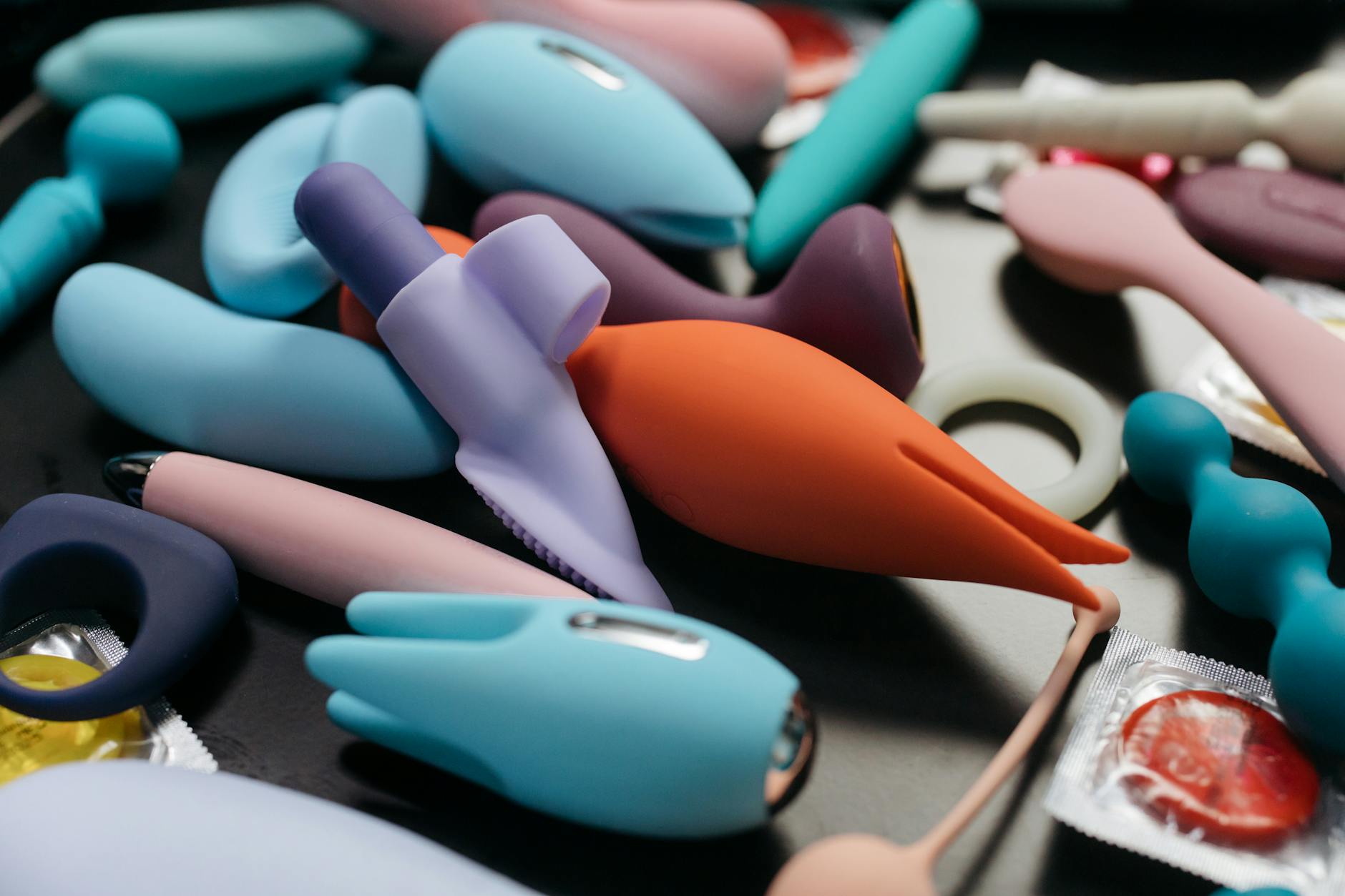
Let's start with the thing nobody talks about
You're in the middle of sex and your body is responding. Maybe there's an orgasm building. Maybe everything feels good physically. But your mind is somewhere else entirely. You're watching yourself from outside your body. Or you're thinking about the grocery list. Or you're just... numb to the whole thing even though nothing hurts.
That's dissociation during sex. And it's wildly more common than anyone admits.
I work with couples and individuals on this exact issue several times a month. The shame around it is massive because people assume it means something is wrong with their desire, their partner, or their body. It usually means none of those things. It means your nervous system is working overtime to protect you.
Why your mind checks out during pleasure
Dissociation is a coping mechanism. Your brain activates it when something feels unsafe. Sometimes that's obvious, like past trauma or a partner who makes you anxious. But often it's subtle. You're in a relationship where you don't fully trust. You're stressed about work or money and your nervous system is still in high alert. You've internalized the message that your pleasure isn't important, so activating it feels dangerous. You're tired, overwhelmed, or running on empty.
Your body doesn't distinguish between a legitimate threat and a false alarm. It just says: this doesn't feel safe. Let's step back.
The physical mechanism is real. During dissociation, blood flow pulls back from the parts of your brain responsible for sensation and presence. Your prefrontal cortex, the thinking part, gets quieter. You're left in a kind of floating state where stimulation happens but doesn't land.
The trap of trying harder
The instinct is always to fix it through more stimulation. Stronger vibration. Different toys. More frequent sex. It almost never works because the problem isn't mechanical. It's neurological and relational.
I've worked with people who've tried every expensive toy on the market and still feel numb. Then they get a basic lemon clitoral vibrator and the difference isn't the toy. It's that they finally stopped performing and started actually paying attention to their body.
That's the shift that matters.
How lemon vibrators help you come back into your body
Lemon adult toys, particularly the suction-style designs that Lemon Sucker makes, work differently than traditional vibrators. They don't require the same kind of mental engagement. You're not chasing a sensation. The suction creates a sustained stimulation that your nervous system can relax into, rather than constantly chase.
This matters for reconnection work because it lowers the cognitive load. When you're worried about whether the stimulation will work or whether you're doing it right, your dissociation deepens. A lemon clitoral vibrator that's designed well lets you stop managing the mechanics and start paying attention to what you're actually feeling.
Second, the rhythm of suction-based stimulation is closer to the natural rhythm your body actually responds to. This sounds technical, but the practical effect is: your nervous system recognizes it as safe. You relax faster. Dissociation has less room to take hold.
Third, and this is crucial, lemon sexual toys are small enough and intuitive enough that you can use them solo first. This is where the real work happens. You get to practice being present with pleasure when there's zero performance pressure, no one else to worry about, no external expectation.
The actual reconnection protocol
Here's what I recommend:
Step one: Solo practice in a safe environment. Give yourself 15-20 minutes alone, no phone, no distractions. You're not trying to orgasm. You're learning to notice what sensation feels like. Start with your lemon vibrator on a low setting and pay attention to how your body responds. Can you name the sensation? Is it sharp, rounded, sustained, rhythmic? Where do you feel it most intensely?
Step two: Check in with grounding. If you notice yourself floating away, pause. Name three things you can see, three things you can hear, three things you can feel with your hands or against your skin. This isn't woo. It's a clinically proven way to activate your prefrontal cortex and bring you back into the present.
Step three: Extend the window. Once solo practice feels grounded, gradually add more time. The goal isn't an orgasm. It's presence. Some people find that after two weeks of this, their entire nervous system gets the message: pleasure is safe.
Step four: Bring it into partnered sex, slowly. If you're in a relationship, tell your partner what you're doing. ("I've been noticing I check out sometimes, so I'm doing some solo work to reconnect with my body. I might want to use my vibrator during sex for the next few weeks.") Lemon vibrators work well here because they're not a big production. The Lem from Lemon Sucker is designed so a partner can use it on you, or you can use it yourself. No awkwardness.
The partner doesn't take it personally. The conversation isn't "you're not enough." It's "my nervous system needs this right now, and here's how we can do it together."
What changes when you stop dissociating
Once your nervous system trusts that pleasure is actually safe, something shifts. You orgasm differently. It feels more integrated. Less like something happening to you and more like something you're actively part of.
You also notice that dissociation shows up in other areas of your life. Stress, overwhelm, relationships where you're not fully honest. The sexual stuff is just the place you notice it first.
This is good information. It's not a flaw. It's your body sending a signal that something needs attention.
When to get more help
If dissociation is severe or connects to trauma, work with a therapist who specializes in somatic (body-focused) approaches. EMDR, Somatic Experiencing, and Internal Family Systems are all evidence-based for this.
If dissociation is milder and mostly situational, often the solo practice with a good lemon vibrator is genuinely enough. Your nervous system learns. Your body recalibrates. Pleasure becomes accessible again.
The key is starting the conversation with yourself about what's actually happening instead of just assuming something's broken.
FAQ
Can dissociation during sex mean my partner is the problem?
Sometimes. If you dissociate only with one partner and feel fully present with others, that's important information about trust or compatibility. But dissociation often follows us across partners because it's a nervous system pattern, not a person problem. The solo work with a lemon clitoral vibrator helps you figure out which is which.
Is dissociation the same as not being interested in sex?
No. Dissociation can happen during sex you actually want. You're physically engaged but mentally checked out. Low desire is different. It's more about not wanting to have sex in the first place. They can happen together, but they're separate issues.
Will using a vibrator during partnered sex make my partner feel inadequate?
Only if you frame it that way. If you approach it as "my nervous system needs support, and this helps me be more present with you," most partners get it. Some actually prefer it because you're more engaged and responsive. The lemon vibrators from Lemon Sucker are designed to feel integrated into sex, not like a substitute.
How long until dissociation goes away?
It depends on the cause. If it's purely stress-related, you might notice a shift in two to four weeks. If it's trauma-related, it typically takes longer and works better with professional support. Be patient with yourself. Your nervous system didn't develop this pattern overnight.
Can you dissociate during orgasm but not before?
Yes. Some people have an orgasm and then immediately space out. This usually indicates that your body associates orgasm with loss of safety. Slowing down your practice, using lower intensity (a lemon vibrator on setting one), and checking in with your body immediately after orgasm can help your nervous system integrate the experience.
Is using lemon sexual toys during solo practice going to make partner sex feel boring?
No. If anything, you'll be more sensitive during partnered sex because you've been practicing presence. The solo practice with a lemon clitoral vibrator teaches your body what good stimulation feels like. That knowledge transfers over.