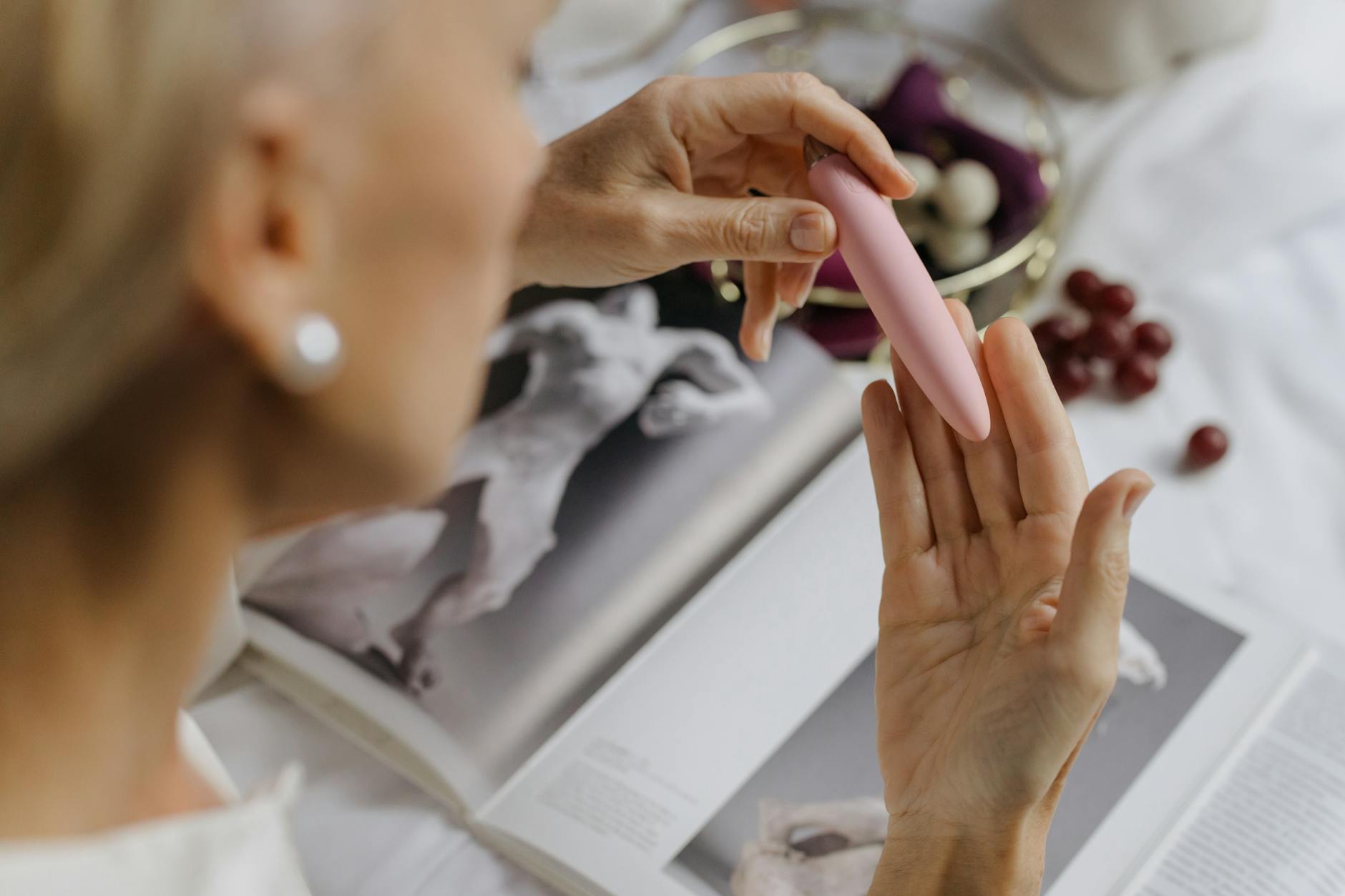
Let's be real about stress and desire
Relationship tension doesn't just kill the mood. It hijacks your nervous system. When you and your partner have been arguing, or when unresolved conflict is sitting between you like a third person in the room, your body goes into a protective state. Blood leaves your genitals. Your brain stops releasing dopamine and oxytocin. Arousal becomes nearly impossible, not because you don't want sex, but because your body genuinely can't access it.
Here's what's happening physiologically: chronic relationship stress activates your sympathetic nervous system (fight-or-flight mode). That system and sexual arousal are basically incompatible. You can't be in a threat-detection stance and also be open, relaxed, and responsive at the same time.
Why desire crashes after conflict
Three things collide when relationship stress is high:
1. Physical shutdown. Cortisol spikes. Oxytocin, the bonding hormone, tanks. Your pelvic floor tightens protectively. Your vaginal tissue may feel dry even if you're usually well-lubricated. Orgasm feels harder to reach or less satisfying when you do.
2. Emotional disconnection. Even if you've had a conversation and technically made up, your nervous system hasn't caught up. You still feel unsafe or unseen. Desire requires a sense of safety and trust. Without it, sex feels mechanical or even triggering.
3. The avoidance trap. When sex feels difficult or empty after conflict, many couples avoid it entirely. Then weeks pass. The distance grows. And desire doesn't return until the underlying rupture is actually repaired, not just talked through.
How lemon vibrators bridge that gap
Lemon clitoral vibrators work for post-conflict desire differently than they work for other blocks. They're not about forcing arousal. They're about giving your nervous system permission to downshift and your body permission to feel good independently of your relationship.
Here's the mechanism: clitoral vibration activates the parasympathetic nervous system (rest-and-digest mode). It's the opposite of the stress response. When you use a lemon vibrator solo, you're essentially saying to your body, "We're safe now. We're allowed to feel pleasure again."
That nervous system reset is crucial. You can't think your way out of relationship stress. You have to feel your way out. And pleasure is one of the fastest routes back to that felt sense of safety.
The solo-first approach
After relationship conflict, I almost always recommend starting with solo exploration before partnered sex. This isn't about avoiding your partner. It's about rebuilding your own baseline.
When you use a lemon vibrator alone, you're not performing for anyone. You're not managing your partner's feelings or trying to match their pace. You're just reconnecting with what feels good in your body without the weight of relational dynamics.
Set aside 20-30 minutes when you're alone and unhurried. Dim the lights. Maybe light a candle. Put your phone away. Use water-based lubricant even if you think you don't need it, because stress often suppresses natural lubrication and you want the experience to feel effortless.
Start with a lemon vibrator on a lower setting. The point isn't to chase orgasm. The point is sensation. Notice what patterns feel good. Notice your breathing. Notice where tension lives in your body.
Many people find that after a few solo sessions with a vibrator, their nervous system genuinely settles. The fight-or-flight response quiets. And suddenly partnered desire becomes possible again.
Timing matters more than you think
Don't use a lemon vibrator the day after a major conflict expecting it to magically restore desire. Your nervous system needs time to metabolize the rupture first.
If you had a big argument on Thursday, Friday is probably too soon. By the following week, when the acute stress has faded a bit, that's when vibrator exploration can help bridge the gap. You're not trying to fast-track forgiveness. You're giving your body time to remember that pleasure is possible.
Also consider your cycle if you menstruate. The luteal phase (the two weeks before your period) is when cortisol is naturally higher and stress hits harder. Using a lemon vibrator during your luteal phase might feel more effortful. That's normal. Follicular phase and ovulation are usually better windows for this kind of reconnection work.
How to reintroduce partnered sex
Once you've had a few solo sessions and your nervous system has genuinely calmed down, you can invite your partner back in. But this doesn't mean jumping into regular sex.
Try this: tell your partner you'd like to use a lemon vibrator together, but frame it as an exploration, not a performance. Maybe you use it on yourself while they're present. Maybe they hold it while you guide them. There's no pressure to reach orgasm or for sex to happen afterward.
The point is to rebuild the association between your body and safety and pleasure while your partner is present. You're rewiring the nervous system to understand: "When my partner is here, it's still safe to feel good."
Many couples find this is when connection actually starts returning. Not because sex itself heals the rupture, but because pleasure in the presence of your partner signals to your brain that the breach is closing.
The conversation that needs to happen first
Before you use a lemon vibrator with your partner after conflict, you actually need to address the conflict itself. Vibrators are not conflict resolution. They're not a substitute for a real conversation about what happened, what you each need, and how you're moving forward.
If you skip this step, you're just covering up the problem. Your body will sense that and won't fully relax into pleasure.
Have the conversation when you're both calm and not in crisis mode. Acknowledge what happened. Say what you need going forward. Listen to what they need. This might take several conversations. That's fine. You're not trying to resolve everything in one sitting. You're trying to establish that you're both willing to repair.
Once that's genuinely underway, then a lemon vibrator becomes a useful tool for rebuilding the felt sense of intimacy and safety.
When to get professional support
If relationship conflict is chronic, or if desire has been low for months even after using lemon vibrators and trying solo exploration, that's a sign you might need a couples therapist or sex therapist.
Sometimes low desire after stress is just your nervous system being protective. Sometimes it's pointing to a deeper relational pattern that needs professional intervention. A trained therapist can help you tell the difference and map a path forward.
You might also benefit from individual therapy if you're carrying old relationship wounds or attachment injuries that are being triggered by current conflict.
The rebuild takes time
Desire doesn't snap back overnight after relationship stress. Your body is wired to be cautious. That's not a flaw. That's protection.
Use lemon vibrators as part of a broader reconnection. Solo exploration. Honest conversation with your partner. Maybe professional support. Patience with yourself and your body's timeline.
Within a few weeks of intentional work, most people notice desire returning. Not with the same urgency as before, maybe, but with something deeper. A sense that pleasure is possible again, and that you and your partner can find your way back to each other.
That's the real healing. The vibrator is just the vehicle.
People also ask
How long does it take for desire to return after relationship conflict?
It depends on the severity of the conflict and how quickly you address it. Minor arguments might affect desire for a few days. Significant ruptures might take weeks. The key variable isn't time alone, though. It's whether the underlying issue has been genuinely addressed. Your nervous system doesn't care how many days have passed if the breach feels unrepaired. Once you've had real conversations and both feel the relationship is moving toward repair, desire usually begins returning within 1-3 weeks of intentional reconnection work.
Can I use a lemon vibrator with my partner right after we've fought?
Not effectively. Your nervous system is still in threat mode. Sex or vibrator play will feel performative or forced. Wait until the acute emotional intensity has faded, you've had a real conversation about what happened, and you both genuinely feel the relationship is stable again. This usually takes 3-7 days depending on the conflict. Trying to use pleasure to bypass the emotional work almost always backfires.
What if my partner isn't interested in using a lemon vibrator with me?
That's separate from the desire question. Some partners have their own feelings about vibrators that have nothing to do with your relationship stress. That's worth a conversation. But your low desire after conflict isn't dependent on partnered vibrator use. Solo exploration with a lemon clitoral vibrator can still help your nervous system reset. Your partner's openness to using it together is a bonus, not a requirement.
Does using a vibrator solo make it harder to want partnered sex?
No, actually the opposite. When your nervous system is stressed, using a lemon vibrator solo helps you reconnect with your body's capacity for pleasure independently of relational dynamics. That actually makes partnered sex feel more possible, not less. You're rebuilding your baseline pleasure and your sense of safety. That foundation makes intimacy with your partner easier, not harder.
How do I talk to my partner about using a lemon vibrator after we've been in conflict?
Keep it simple and frame it around reconnection, not performance. "I'd like to explore using a vibrator together as a way to rebuild closeness. I know things have been tense and I want to find our way back to each other." That's vulnerable and clear. If they resist, ask what concerns they have. It might not be about vibrators at all. It might be that they're still processing the conflict. That's okay. You can still use a vibrator solo while you both work on the relationship itself.
Can stress permanently damage my desire?
Not permanently. Desire is responsive, not fixed. When stress goes down, desire usually returns naturally. The longer stress goes unaddressed, the more entrenched low desire can become. But this is reversible. People rebuild desire all the time after periods of high conflict. The key is addressing both the stress itself and any underlying relationship patterns that created it in the first place.
Your body knows the difference between real safety and false reassurance. After relationship conflict, lemon vibrators help bridge the gap while you do the real work of repair. Solo exploration first. Honest conversations alongside. Then partnered reconnection. That's the sequence that actually works.