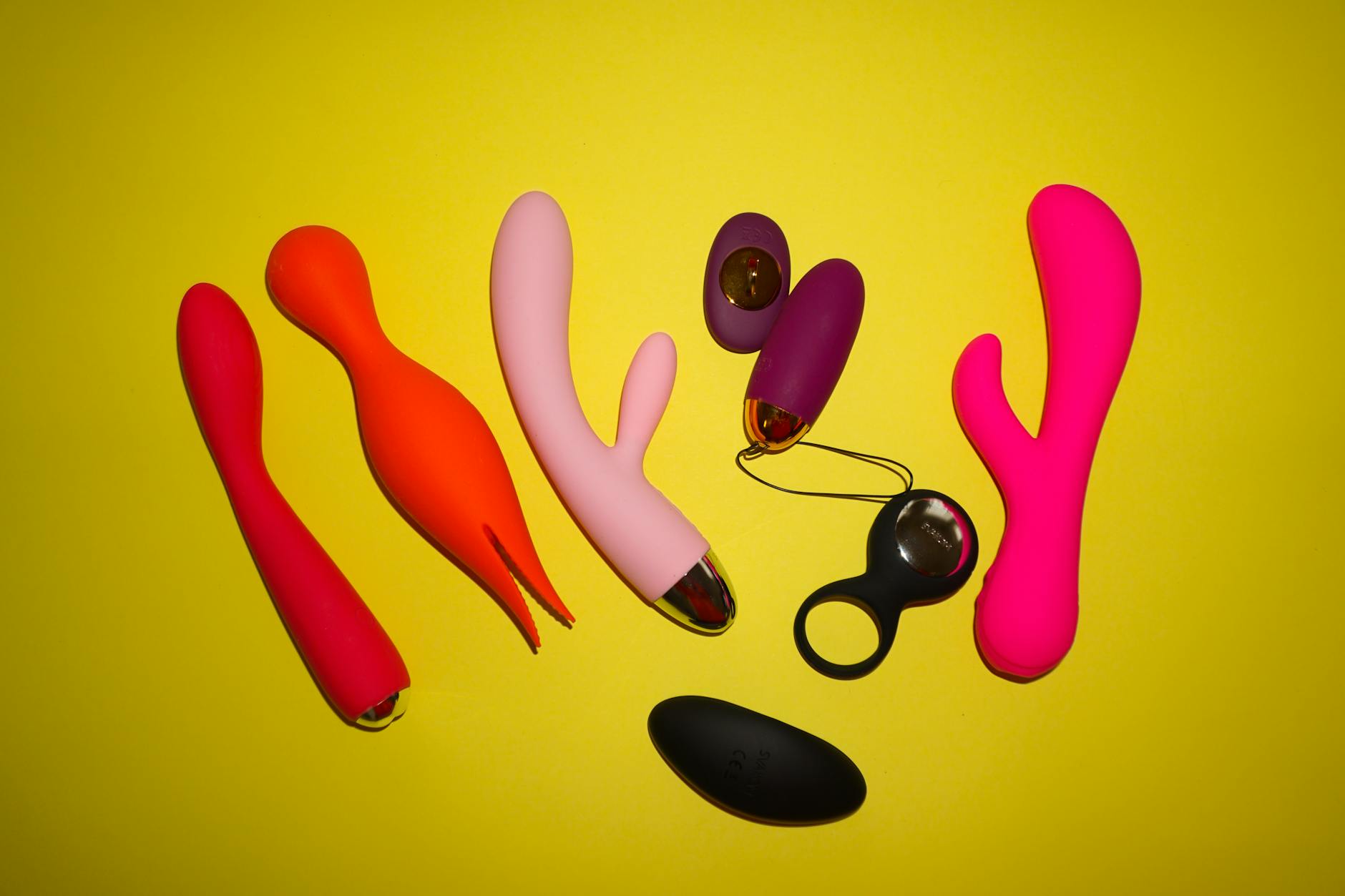
What actually happens when you stop hormonal birth control
You go off the pill or remove your hormonal IUD, and suddenly your body feels like someone else's. That's not dramatic. That's biology. Hormonal birth control floods your system with synthetic progestin and sometimes estrogen for months or years, and when it stops, your actual hormone production kicks back in. For many people, this means sensation returns, arousal feels sharper, and orgasms rebuild themselves from scratch.
Here's what I tell my clients: this transition is disorienting, but it's also an opportunity. Your pleasure baseline is recalibrating. A lemon clitoral vibrator like the Lem or Berri can be your bridge during that recalibration.
The physical shifts you'll notice
Hormonal birth control suppresses testosterone. You probably didn't notice this while you were on it because you'd never felt the alternative. Testosterone drives desire across all bodies, and it also sharpens sensation at the clitoris. When you stop hormonal birth control, testosterone rebounds over weeks to months. This means arousal takes less time to build, sensation feels more acute, and your clitoris might feel more responsive than it ever has.
Second, your cervical fluid changes. Hormonal birth control keeps it thin and hostile to sperm. Off the pill, it fluctuates through your cycle again. This lubricates your entire pelvic region more generously. You might not need external lube the way you used to. But you'll also feel more texture, more sensation, more friction. This is good. It's also a lot at first.
Third, your mood cycle returns. If you were on the pill for years, you might not remember that your mental state shifts through your cycle. This isn't weakness or instability. It's neurochemistry. Understanding that your libido peaks mid-cycle, around ovulation, helps you time pleasure sessions when sensation naturally peaks.
Why lemon vibrators work particularly well during this transition
Lemon vibrators, especially air-suction models like the Lem, don't rely on direct friction the way wand vibrators do. They work by creating a gentle suction pattern that stimulates the nerve-rich tissue of the clitoral head without the kind of intense rubbing that can feel overwhelming when your nerves are already reawakening.
During hormonal recalibration, your clitoris is hypersensitive in the best way. You might find that settings 1 through 3 on a clitoral vibrator feel more than enough. You might even prefer the gentler pulse patterns. Lemon toys let you dial down the intensity without losing effectiveness. The suction seal also means you can use less or no external lubricant at first, which some people prefer while they're getting reacquainted with their own wetness.
Another reason lemon vibrators shine here: they're intuitive. You don't need to learn a new technique. Just place and let the suction do the work. Your brain gets to focus on sensation instead of mechanics.
Timing your use through the month
One of the hidden gifts of coming off hormonal birth control is that your body gets a monthly rhythm back. You're not stuck in a flat hormonal line anymore. You can use this to your advantage.
Around ovulation, mid-cycle, your testosterone peaks naturally. This is when arousal feels easiest, sensation feels sharpest, and orgasms come faster. If you're rebuilding your pleasure practice after stopping birth control, start here. Use your lemon vibrator during this window. You'll get the most responsive feedback from your body, which builds confidence and reinforces the reconnection.
In the luteal phase, after ovulation through your period, arousal might feel slower. This doesn't mean something's broken. It means your nervous system is in a different mode. You might need more warm-up time, more buildup, longer sessions. Your lemon vibrator is still your friend here, but you might spend more time on lower settings, letting sensation build gradually instead of diving straight to intensity.
If you're cycling with partners, this rhythm also becomes useful data for conversations about timing, touch, and what you both need from intimacy.
The first month back: what to expect and how to ease in
Give yourself permission to feel weird. You might feel overexcited by sensation. You might feel numb. You might flip between the two. This is all normal. Your nervous system is updating its expectations, and that takes time.
Start with solo practice. This isn't selfish. This is data collection. You need to know what your body responds to on its own terms before you layer a partner's touch or expectations into it. Use your lemon vibrator on low settings. Spend at least 15 to 20 minutes warming up, even if it feels like overkill. Your arousal curve is rebuilding, and slower warm-up teaches your body to pay attention to subtler sensations again.
You might have fewer orgasms at first, or they might feel different. This is temporary. Usually by month two or three, as your hormone levels stabilize and your nervous system adjusts, the sensitivity and frequency normalize. By month four or five, many people report that their orgasms feel more intense than they ever did on hormonal birth control.
Don't chase intensity early on. Chase sensation. Notice what feels good, what texture matters, what rhythm works. Your lemon vibrator is a tool for exploration, not a performance metric.
What to tell a partner during this transition
If you're in a relationship, your partner needs context. You're not less attracted to them. You're not broken. You're recalibrating. Your pleasure timeline might be different now. You might need more foreplay or want to use your lemon vibrator first, alone, before partnered sex. You might want them to slow down because sensation feels too sharp. None of this is rejection.
The best couples I work with treat this as an adventure, not a problem to solve. You get to rediscover each other's bodies and your own pleasure in a new register. That's actually pretty exciting if you frame it that way.
When to seek support
If after three months off hormonal birth control your libido hasn't returned at all, or if sensation feels persistently numb, check in with a gynecologist. Sometimes this points to other things happening (thyroid shifts, depression, stress, relationship disconnection). Sometimes it just means your body needs more time. But you deserve clarity.
If using a lemon vibrator triggers pain, cramping, or heavy bleeding, pause and talk to your doctor. Post-pill bleeding sometimes gets heavier temporarily. Pain doesn't. That's different information.
FAQ: common questions after stopping hormonal birth control
How long does it take for sensation to come back after quitting the pill?
Usually three to six weeks for initial rebound, and three to six months for full normalization. Some people feel the shift within days. Others take months. Your timeline depends on how long you were on hormonal birth control, your baseline genetics, and what else is happening in your life. Stress, sleep debt, and relationship tension all slow down the process. Be patient with yourself.
Will my orgasms feel different than they did on birth control?
Most likely yes, and often better. Hormonal birth control dulls sensation and makes orgasms harder to reach for many people. Once you stabilize off it, you might have stronger, faster, or more frequent orgasms. You might also need different stimulation. This is why solo exploration with your lemon vibrator matters. You get to learn your new pleasure baseline without pressure.
Can I use a lemon clitoral vibrator right after stopping birth control, or should I wait?
You can start whenever you feel ready. Some people need a week or two to let their body settle. Others want to explore immediately. There's no right timeline. Start gently if you go early. Lower settings, longer warm-up, less pressure. Your clitoris might be extra sensitive for a couple weeks, and that's okay.
Will my interest in partnered sex come back, or could stopping birth control permanently affect desire?
Desire almost always returns. It might look different. You might want partnership differently, on a different timeline, or with different kinds of touch. But the capacity for desire comes back. If it doesn't after six months, that points to something beyond just the hormonal shift. Depression, relationship issues, and trauma can all coexist with coming off birth control. Those are worth addressing separately.
Should I use my lemon vibrator before or after partnered sex during this transition?
Both are fine. Some people use their vibrator solo first to warm up and reconnect with their own sensation, then bring that energy into partnered time. Others prefer partner touch first, then finish with the vibrator when they want more targeted stimulation. Some want the vibrator integrated into partnered sex from the start. There's no right answer. What matters is knowing what you want and being able to ask for it.
What if I feel guilty using a clitoral vibrator more now that I'm off birth control?
Let that guilt go. You came off hormonal birth control to reconnect with your body's actual signals. Your lemon vibrator is a tool for doing exactly that. It's not cheating on a partner, it's not selfish, it's not a sign that something's wrong. It's a tool that helps you explore sensation and pleasure on your terms. That's the whole point.
The bottom line
Coming off hormonal birth control is a recalibration, not a failure. Your body is waking up, sometimes suddenly, to sensations it's forgotten or never fully felt. A lemon vibrator doesn't fix anything because nothing's broken. It's a bridge tool that lets you explore your new baseline with gentleness, precision, and no pressure. Give yourself permission to feel new. The pleasure that comes after is worth the adjustment.