
The thing nobody tells you about bringing up vibrators
Honestly, most people think the hard part is owning one. It's not. The hard part is saying out loud that you want one. Especially to someone you sleep with regularly, someone whose opinion feels like it actually matters.
I've had clients describe bringing up vibrators with their partners as harder than coming out, harder than asking for a raise, harder than admitting they wanted couples therapy. And they're not being dramatic. There's real vulnerability baked in: you're essentially saying "I want more pleasure" which can get twisted into "you're not enough," even when that's not what you mean at all.
Why the silence makes it worse
Here's the data: couples who talk openly about sex and desire have stronger relationships, higher satisfaction, and better sexual experiences overall. That's not surprising. What is surprising is how rare that conversation actually is. Most people would rather initiate sex than initiate a conversation about what they actually want from sex.
The longer you sit on the idea of wanting a lemon vibrator, the heavier it gets. It stops being a practical tool and starts feeling like a secret. And secrets, even small ones, create distance. Your partner senses something is off. You're holding back. And now instead of talking about a clitoral vibrator, you're fighting about why you've been withdrawn.
So the first part of this is simple: naming it changes everything. Not in a dramatic way. In a practical, relationship-building way.
Frame it as a conversation, not a confession
This matters more than the exact words you use. You're not confessing to a desire. You're opening a conversation with someone you trust about something that interests you.
The difference:
"I have something I need to tell you that's been bothering me." This signals shame. This signals you're admitting to something wrong.
"I've been reading about clitoral vibrators and I'm curious about trying one with you." This signals interest. Openness. Possibility.
One sounds like a problem to solve. The other sounds like something to explore together. Choose the second frame.
Pick the right moment (and the wrong ones)
Wrong moments: during sex, right after sex, when you're both stressed, when they're distracted, in front of other people, during an argument about something unrelated.
Right moments: quiet evening at home, after you've both eaten, when there's time to actually talk without rushing, when you're both in a good mood and feeling connected.
I usually recommend a walk or a quiet moment on the couch. Not a heavy sit-down conversation, just a natural moment when talking feels normal. The goal is to keep this light and exploratory, not clinical or grave.
What to actually say (and variations that work)
Here are three frames that land well:
The curious approach: "I've been reading about lemon vibrators and they seem really interesting. I'd love to try one together. Would you be open to that?"
The desire approach: "I've been thinking about what would feel good for me, and I'm curious about exploring with a vibrator. I want you involved in this. What do you think?"
The pleasure approach: "I read that a lot of people use clitoral vibrators during partnered sex and it actually increases connection. I want to find new ways to feel good together. Would you be willing to explore that with me?"
Notice what's in all three: "I," "together," "you," and a question that invites them in instead of demanding a response.
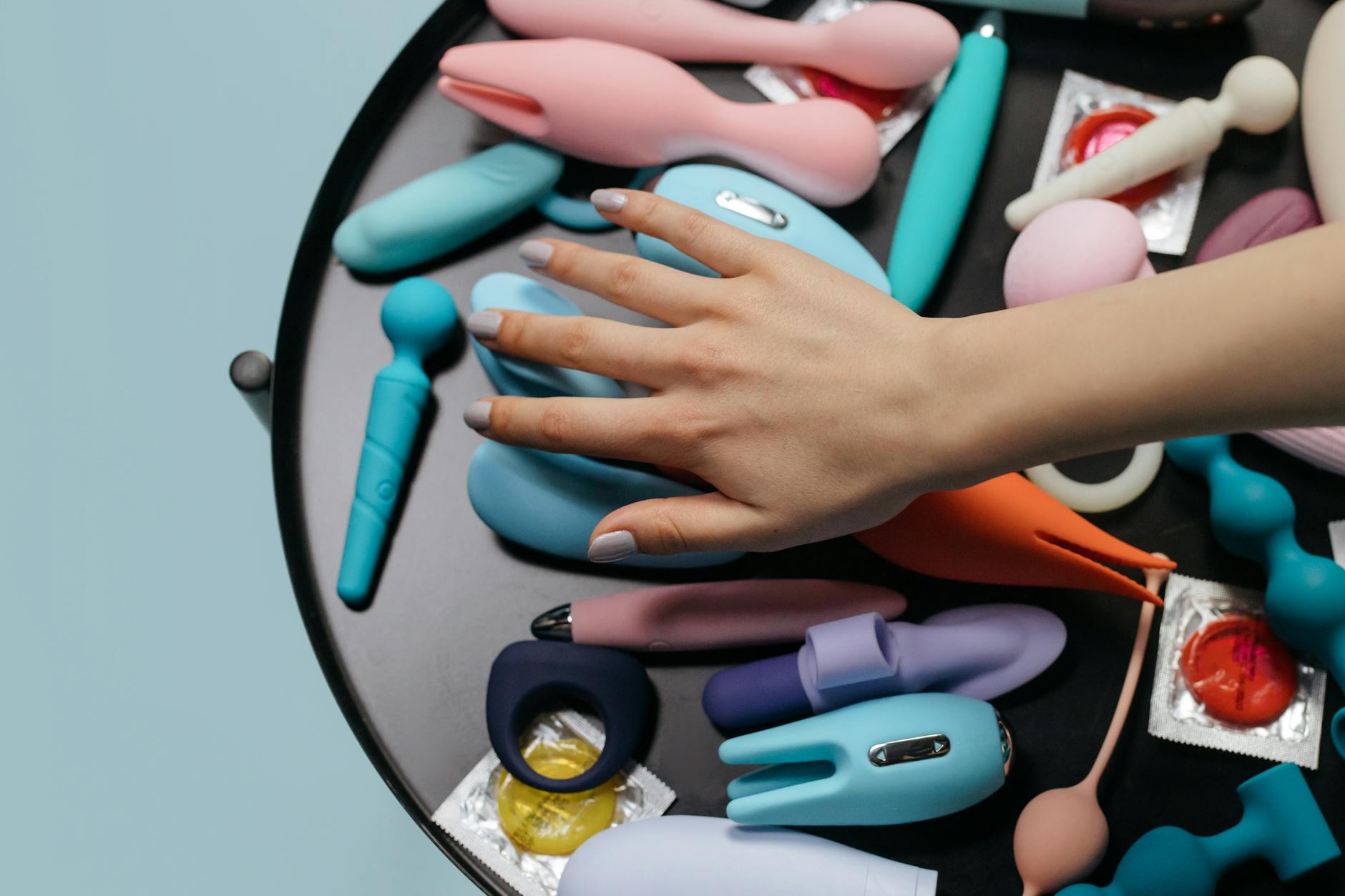
Photo by cottonbro studio on Pexels
What they might be scared of (and how to address it)
Your partner's brain is going to jump to conclusions. Not because they're insecure or unreasonable, but because vulnerability triggers defensiveness in most people. Here are the fears that typically show up:
Fear: "You're not satisfied with me." Address this directly. "I'm really happy with you and what we do together. This isn't about you not being enough. It's about me exploring another way to feel good. I want you there with me."
Fear: "You want this more than me." Reframe pleasure as collaborative. "This isn't about replacing anything. It's about adding something that could feel good for both of us. I want us to experience this together."
Fear: "You're going to prefer it to me." This is about reassurance. "My pleasure is connected to you. The vibrator is a tool, like anything else we use. You're what matters."
Fear: "This means something is wrong in our relationship." Normalize it. "Exploring is actually a sign of a healthy relationship. It means we're comfortable trying new things together."
You can't control their response. But naming their likely fears before they speak them short-circuits a lot of defensive reactions.
If they say no (or not yet)
A no doesn't mean never. It might mean not right now. It might mean they need time. It might mean they want to understand more first.
If your partner isn't immediately on board, ask what would help them feel more comfortable. Is it education? Do they need to know more about what a lemon vibrator actually is and how it works? Do they want to research together? Do they need reassurance? Do they need time?
Don't push. Pushing makes this about the vibrator. Respecting their pace makes this about your relationship. And a relationship where both people feel heard is way sexier than a relationship where one person got their way.
That said: if this matters to you and they continuously shut it down without engagement, that's worth paying attention to. Not as a deal breaker necessarily, but as information. Unwillingness to explore your desires together is a relationship signal worth taking seriously.
If they say yes (and they're nervous)
Great. Now you get to be the confident one. Suggest you look at options together. Some people love the idea of going to a shop or browsing online as a couple. Others find that too high-pressure.
A lower-pressure alternative: you research a couple of options, show them pictures, and ask what appeals to them. The Lem lemon clitoral vibrator is intuitive and designed for beginners. Showing them something real and specific makes it less abstract.
Talk about how you'd use it. Not in a graphic way, just practically. "I'm thinking we could use it during foreplay" or "I'd love to try it together when we have time to really enjoy it." This moves it from fantasy to logistics, which actually reduces anxiety.
Then set a date. Not because you need a rigid schedule, but because having something concrete to look forward to gives you both permission to get comfortable with the idea.
The conversation after the conversation
Here's what most people miss: talking about it once isn't enough. After you've actually tried it, you need another conversation. Not a heavy one. Just: "That felt good." "What did you like?" "Want to try it again?"
This normalizes it. It makes it clear this isn't a one-off thing that happened once and never get acknowledged. It's part of your sexual landscape now, which means it's part of your relationship.
You might also discover that your partner enjoyed it more than they expected. Or they felt awkward. Or they have ideas about how you could use it differently. That feedback matters. It's the difference between bringing in a vibrator and actually building a more connected sex life.
The bigger picture
Introducing lemon vibrators to your partner is really about introducing the idea that you both deserve pleasure. That exploration is normal. That communication makes things better, not weirder. That wanting more doesn't mean rejecting what you have.
Those conversations are foundation-level relationship work. They matter as much as anything else you do together. So even if the vibrator sits in a drawer, the conversation you had to get here is still a win.
Your pleasure matters. Their willingness to care about your pleasure matters more.
People also ask
What's the best lemon vibrator to introduce to your partner?
Start with something intuitive and low-pressure. The Lem lemon clitoral vibrator is designed for couples and beginners because it's quiet, simple to use, and visually less intimidating than some options. Avoid anything too intense or niche for a first try. You want them thinking "oh, this is nice" not "what am I looking at."
Should I show my partner the vibrator before we use it?
Absolutely. Mystery creates anxiety. Seeing it, holding it, understanding how simple it is removes a lot of the mental barrier. Some people find that looking at options together online is actually a fun couples activity. It normalizes the conversation and makes it collaborative instead of you presenting them with a finished decision.
What if my partner thinks vibrators mean I'm not attracted to them?
This comes up constantly and it's worth addressing head-on. A vibrator does one thing: it provides consistent stimulation. Your partner provides intimacy, presence, attention, and connection. Those are completely different. You can frame it plainly: "A vibrator doesn't replace you. It's a tool that can help me feel good, which actually makes our sex life better because I'm more relaxed and present." That's not romantic, but it's true.
Is it weird to use a vibrator with a partner if I've never used one alone?
Not at all. Some people feel more comfortable exploring together than alone. If that's your situation, just give yourself and your partner permission to go slow and figure it out as you go. There's no learning curve you need to hit before bringing it into partnered sex.
What if we try it and I don't like it?
That happens. Not every tool works for every person. If you try it and it doesn't feel good, you say so. "That wasn't what I expected" or "I don't think this is for me" and you move on. This is why the conversation matters more than the vibrator. If you can talk honestly about what doesn't work, you can talk about what does.
How do I know if my partner actually wants this or is just doing it for me?
You ask. After you've tried it: "I want to make sure you actually wanted this and it wasn't just for me." That question opens the door for honesty. And honestly? If your partner is willing to try something that matters to you even if they're not sure about it, that's its own form of love. But yeah, check in. Make sure it's mutual.