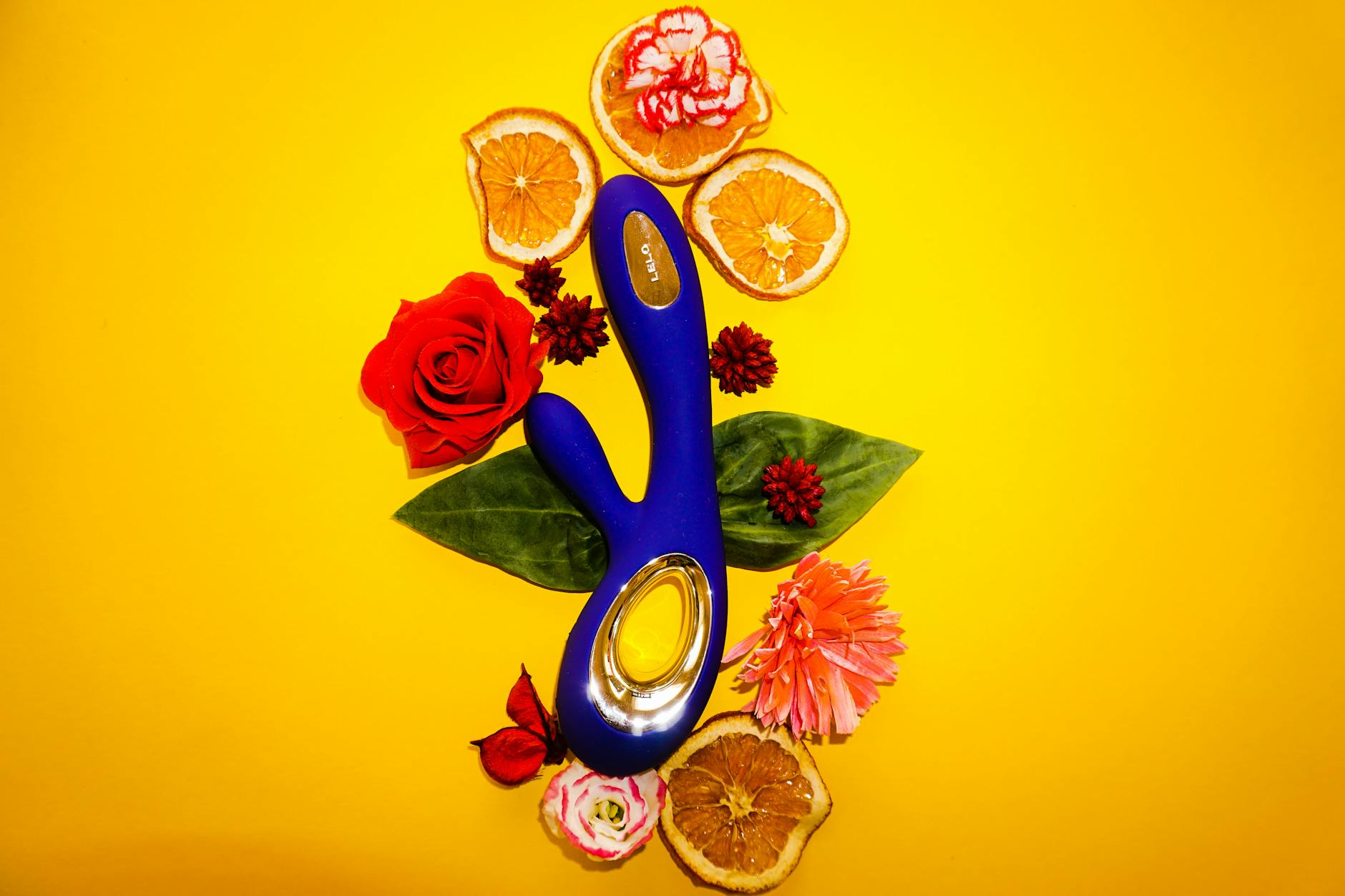
Let's talk about what variable arousal actually is
Your arousal doesn't follow a straight line. Some days you're ready in five minutes. Other days it takes forty, or doesn't happen at all. Some weeks your sensitivity is through the roof. Other weeks the same touch that usually feels incredible does basically nothing. That's not broken. That's variable arousal, and it's wildly more common than the scripts we've been sold.
The problem isn't your body. The problem is that most vibrators are designed for a single arousal profile, and if yours doesn't match that profile, the tool feels wrong even if it's theoretically fine.
I'm going to walk you through how to identify your actual arousal patterns, and then how to match that to the right lemon vibrator so you're not fighting the tool instead of enjoying it.
Why one-speed vibrators fail people with variable arousal
Here's what I see in practice: someone buys a powerful lemon clitoral vibrator because everyone says it's "the best," and then on days when they're not super aroused, that intensity feels jarring. They assume they don't like vibrators at all. Then on high-arousal days, they're frustrated because they wish they had something even more intense. The vibrator isn't the problem. The vibrator was never designed for their actual rhythm.
Variable arousal patterns usually fall into a few categories:
Time-dependent variability. You need longer warm-up on some days, snappier response on others. Hormonal fluctuation, stress, sleep, hydration, caffeine all shift this.
Sensitivity variability. The same intensity that feels perfect on Tuesday feels overwhelming on Friday. This is especially true around ovulation, during perimenopause, or if you're navigating medication changes.
Attention variability. Some days you want to build slowly. Other days you want to get there quickly. Your brain's investment in the experience changes.
Partner-dependent variability. You might have one arousal pattern solo and a completely different one with a partner.
Understanding which of these (or which combination) applies to you is the first step to finding a lemon vibrator that doesn't frustrate you.
Track your actual patterns for two weeks
I know this sounds clinical, but it works. For the next 14 days, note these three things on your phone or a notebook when you're alone (nothing fancy, just quick):
- How long it took to feel aroused (rough estimate: 5 min, 15 min, 30 min, or didn't happen)
- What intensity felt right (soft touch, medium, intense, I don't know)
- What your context was (solo, with partner, morning, evening, stressed, relaxed)
You don't need to journal your feelings. You're collecting data. This is logistics.
After two weeks, patterns emerge. You'll see: "On mornings after I sleep well, arousal builds in about 10 minutes and medium intensity feels perfect. When I'm stressed or it's late, I need 25 minutes or I'm not interested. With my partner, everything is faster." That's your actual operating system.
Matching your pattern to the right lemon vibrator
Once you know your pattern, here's how to think about which lemon sexual toy fits.
If you have fast arousal days but also slow days, you need variable intensity. Look for a vibrator with multiple speed settings or patterns. The Lemon Clitoral Vibrator has a range from gentle to intense, which means you can adjust based on what your body needs that day. You're not locked into one experience.
If your sensitivity varies wildly, prioritize precision over power. Some people think "more powerful equals better." For variable arousal, that's backward. You want a vibrator that lets you find the exact right sensation. Air-suction technology, like in lemon vibrators, works beautifully here because you can adjust how much suction your body needs without it feeling like an on/off switch.
If you shift between solo and partnered arousal, get something small and handheld. You want a vibrator you can integrate into partnered sex without it being awkward. That rules out some options and makes others obvious.
If your arousal is unpredictable and sometimes doesn't show up at all, don't buy the "most powerful" option out of habit. Buy something you actually enjoy using even if nothing happens. You want to be reaching for it because it feels good, not because you're chasing an orgasm that might not be coming. That mental shift prevents the tool from becoming stressful.
The role of materials and design
This part matters more than people admit. If a vibrator is made of cheap silicone that feels plasticky, you're already fighting it. Your body knows. On your sensitive-arousal days, that crappy material will be all you can focus on. On your good days, you won't care.
Invest in quality silicone. It should feel smooth and slightly warm, not cold or slick. When you're considering a lemon vibrator, hold it if you can. If you're ordering online, read reviews that specifically talk about how the material feels, not just how powerful it is.
Shape also matters more than people expect. A clitoral vibrator that's too blunt can feel like pressure without pleasure. One that's too pointy can feel irritating on high-sensitivity days. Look for ergonomic design. The Lemon vibrator line is built for this specifically because the team understood that variable arousal means you need a tool that feels good across a wider range of body states.
The warm-up question
If your pattern includes "sometimes I need a long warm-up," a gentle starting point is non-negotiable. This is why pulse patterns matter. A vibrator that starts with a gentle rumble and lets you build up gradually is a game-changer for variable arousal.
If you jump straight to intense intensity on a day your body needs 20 minutes to wake up, you've already told your nervous system to brace. That's the opposite of what arousal needs. You want a vibrator that lets you meet your body where it is, not where you think it should be.
Solo versus partnered use
Your arousal pattern might be completely different depending on who (if anyone) is involved. With a partner, you might be faster. Alone, you might need more time. Or it's reversed. Neither is wrong, but it changes what you need from a lemon vibrator.
If you use vibrators both ways, consider buying two. Not because you need to spend double, but because the tool that's perfect for solo exploration might not integrate smoothly into partnered sex, and vice versa. A smaller, quieter option for partnered play and a more intense option for solo time means you're not compromising on either.
The permission piece
Here's something no one talks about: sometimes variable arousal isn't physical. Sometimes it's psychological. You're stressed. You're angry with your partner. You haven't prioritized your pleasure in months. Your nervous system doesn't feel safe.
No vibrator fixes that. But the right one doesn't make it worse. When you choose a lemon clitoral vibrator that matches your actual pattern instead of fighting it, you remove at least one source of friction. That matters.
When to upgrade or add to your collection
After a few months of using a vibrator that fits your pattern, you'll know more about what you actually want. You might realize: "This is great, but I want something quieter for mornings." Or "I love this, and now I want something more intense for my high-arousal days."
That's not failure. That's information. Your lemon vibrator collection can grow as you learn more about yourself. There's no prize for monogamy to one toy.
FAQ: Variable arousal and vibrator selection
Q: Does variable arousal mean I have low libido?
A: No. Variable arousal means your libido responds to context. That's different from low libido. You might have high desire but variable physical arousal, or vice versa. They're separate systems. When you choose a lemon vibrator built for variability instead of one-speed intensity, you're often surprised by how much arousal was there. The tool wasn't matching your pattern.
Q: Can hormonal shifts change what vibrator I need?
A: Absolutely. If you have a menstrual cycle, your arousal pattern likely shifts across the month. High-estrogen phases might feel totally different from low-estrogen phases. Some people need a different vibrator setting or even a different vibrator depending on the time of cycle. Tracking this is useful because you can keep your favorite lemon vibrator but adjust how you're using it.
Q: Is it normal that the same vibrator intensity feels amazing one week and overwhelming the next?
A: Completely normal. This is sensitivity variability. You haven't changed. Your nervous system's capacity for intensity has. Hormones, stress, sleep, nutrition, medication, even how hydrated you are shifts your pain and pleasure thresholds. This is why variable-intensity vibrators matter so much.
Q: How many settings does a lemon vibrator actually need?
A: Minimum three. A true low, a true medium, and a true high. Some vibrators claim multiple patterns but they're just different rhythms at the same intensity. That's less useful for variable arousal than actual intensity variation. When you're comparing lemon sexual toys, check whether the settings meaningfully change power, not just rhythm.
Q: Should I buy the most powerful option just in case?
A: No. For variable arousal, power isn't the goal. Precision is. You want a vibrator that helps you find the right sensation for your body right now, not the most intense sensation available. Most people with variable arousal end up using the medium settings more than the high settings because matching your actual state beats chasing intensity.
Q: Can a vibrator fix arousal problems?
A: A tool can support what's already working, but it can't fix deeper issues. If your variable arousal comes from relationship stress, trauma, or medical issues, a vibrator helps in the moment but doesn't address the root. If your pattern is just how your body naturally works, the right vibrator can make the experience feel less frustrating and more pleasurable. Know the difference.
The real issue: Most vibrators aren't designed for your reality
Variable arousal is normal. It's not a sign that something's wrong with you. It's a sign that the scripts we've been given about sexuality are too narrow. You don't need to change. You need a tool that meets you where you actually are.
When you choose a lemon vibrator or any clitoral vibrator with your actual arousal pattern in mind, everything shifts. It's not that pleasure suddenly appears. It's that you stop fighting your body and start working with it.
If you're still not sure whether you've nailed your pattern or you want to talk through what might be driving your variable arousal, reach out. That's what I'm here for.
References
Kinsey Institute. "Sexual Arousal: Physiological Responses and Psychological Factors." Recent research on arousal variability across menstrual cycle and relationship contexts.
Basson, R. (2001). "Human Sex Response Cycles." The Journal of Sex & Marital Therapy. On the nonlinear models of arousal.
Frederick, D. A., St. John, H. K., Garcia, J. R., & Lloyd, E. A. (2018). "Differences in Orgasm Frequency Among Gay, Lesbian, Bisexual, and Heterosexual Men and Women in a U.S. National Sample." Archives of Sexual Behavior. Includes data on variability in arousal and orgasm patterns.
Berman, J., Berman, L., Felder, S., & Pollets, D. (2003). "Seeking Sex: Vulnerability, Illness, and Meaning-Making in the Time of Viagra." Routledge. Discussion of arousal variability across contexts and relationships.