Let's be honest about what big changes do to your body
You got the promotion. You moved cities. You changed careers, came out, went back to school, or rebuilt your identity from scratch. And somewhere in the chaos, your sex life went quiet.
This isn't a sign you've broken something. It's what happens when your nervous system is in overdrive. Your brain is rewiring itself, your body is adjusting to new rhythms, and pleasure drops to the bottom of the priority list because survival feels more urgent.
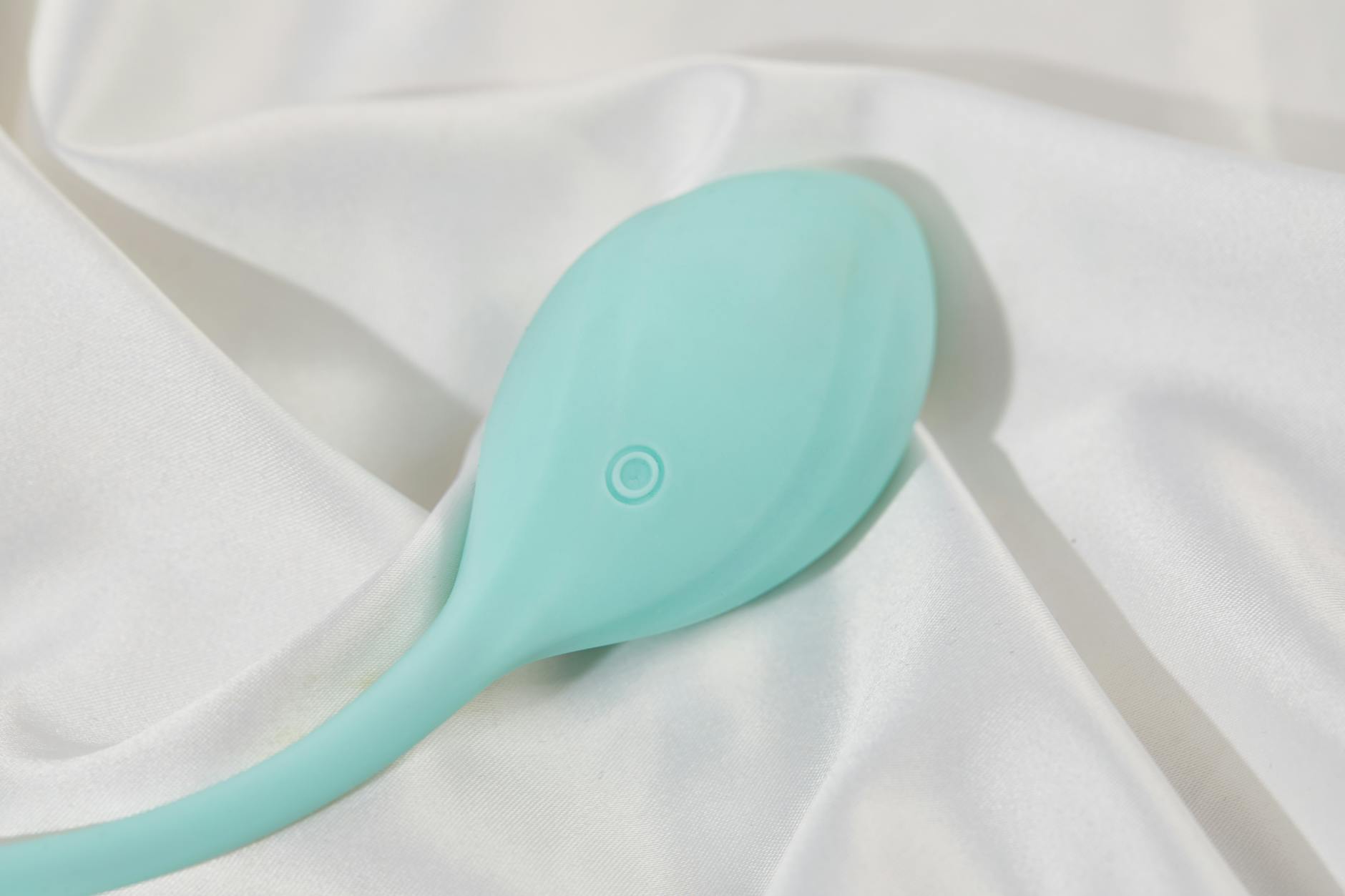
But here's the thing: pleasure isn't a luxury that waits. It's a reset button. And sometimes a simple tool like a lemon vibrator is exactly what you need to remind your body that sensation matters again.
Why pleasure disconnects during major transitions
When life shifts dramatically, three things happen at once.
First, your nervous system moves into a state of hypervigilance. You're navigating new social structures, new routines, new expectations. Your brain is constantly scanning for what could go wrong. Arousal requires the opposite of this state. It requires safety, presence, and a willingness to be vulnerable. When you're in survival mode, vulnerability feels dangerous.
Second, sensory integration suffers. Your body is constantly processing new environments. Your skin is registering new temperatures, your ears are tuning to new soundscapes, your proprioception is recalibrating. This sensory noise crowds out the subtle signals that build arousal. Many people in transition report that touch feels "too much" or "not enough." Both are normal.
Third, your attention span narrows. You've got mental bandwidth for the move, the job, the relationship renegotiation. Pleasure requires a kind of mental freedom that doesn't exist when you're constantly problem-solving.
The result: you feel disconnected from your body. Not broken. Not asexual. Disconnected.
How clitoral stimulation rewires the nervous system during upheaval
This is where a lemon vibrator or other quality clitoral vibrator becomes genuinely useful. Not as a quick fix, but as a tool for nervous system regulation.
Here's the neuroscience: clitoral stimulation activates the pudendal nerve, which is directly connected to the vagus nerve. The vagus nerve is your body's brake pedal for stress. When you stimulate it through pleasure, you're literally signaling to your nervous system that safety exists. That presence is possible. That sensation can feel good.
Unlike partnered sex, which carries social and relational pressure, solo pleasure with a device is judgment-free. There's no performance expectation. No one waiting for you to respond a certain way. Just your body, your timing, and a tool designed for your specific anatomy.
Lemon sexual toys and other air-suction vibrators are particularly effective during transitions because they don't require the mental load of traditional vibration settings. You press the button. The sensation is consistent and focused. Your brain doesn't have to negotiate anything.
What solo pleasure actually does during major life changes
I'm not going to tell you that using lemon adult toys solves the big stuff. The job stress, the relocation anxiety, the identity questions. They don't.
But they do three important things:
First, they create a container for presence. When you spend fifteen minutes with sensation, you're training your nervous system to be in your body instead of three steps ahead of it. That skill transfers. You show up more present in conversations, at work, with your partner.
Second, they rebuild the mind-body connection. Major transitions can leave you feeling dissociated from your physical self. Intentional pleasure is a conversation with your body. You're saying: "I see you. I'm listening to what feels good. Your needs matter." That's not abstract. That's reparative.
Third, they restore a sense of agency. During transitions, so much is out of your control. Someone else's rules at the new job. A landlord's requirements in the new apartment. Fresh social hierarchies everywhere. Solo pleasure is something only you control. The timing, the intensity, the rhythm. That control matters neurologically.
The practical side: how to rebuild sensation when you're overwhelmed
If you're in transition and touch feels confusing, start here.
Set a time limit. Not indefinitely, not "whenever I feel like it." Fifteen minutes. Your nervous system needs structure right now. Boundaries create safety.
Remove pressure to climax. Orgasm is not the goal. Sensation is. If it happens, great. If it doesn't, you still did something valuable. This reframe is essential during transitions, when your body might need more time to respond than usual.
Start at the lowest setting. If you're using a lem vibrator or another lemon clitoral vibrator, begin with the gentlest intensity. Many people in high-stress periods have heightened sensitivity that feels almost painful. You're not broken. Your nervous system is just overwhelmed. Work up gradually over multiple sessions.
Pay attention to what your body wants, not what you think it should want. This is both the hardest and most important part. Your body might want something different than it did before the transition. That's not regression. That's adaptation.
When solo pleasure becomes a gateway to partnered reconnection
If you're in a relationship, rebuilding solo pleasure often precedes rebuilding partnered pleasure.
When you're in transition, your partner usually is too. Even if they changed jobs and you didn't, the shift ripples through both of you. Pressure to perform sexually can create distance. So can resentment about mismatched desire. So can the sheer exhaustion of reorganizing your entire life together.
But when you spend time alone rebuilding your own pleasure, something shifts. You remember what sensation feels like. You remember that your body can feel good. That familiarity makes it easier to bring yourself to partnered sex without the weight of "I should be aroused by now" or "Something is wrong with us."
If you're partnered, you might eventually say something like: "I've been using solo time to reconnect with my body during this transition. I'd like to bring some of that presence to us, but I need to go slow." That honesty opens a conversation. It also gives your partner permission to do the same.
The timeline is not linear
Here's what I tell clients going through major transitions: your nervous system needs about three to six months to genuinely settle into a new baseline. That's not a hard rule. It's an approximation.
Your pleasure recovery might not follow that timeline. You might feel reconnected to sensation in month two, then feel disconnected again in month four when a new challenge emerges. That's not backsliding. That's how transitions actually work. They're not a straight path. They're a spiral.
Keep using your lem vibrator or clitoral vibrator even when you feel like you should be "over it." Consistency matters more than intensity. Two minutes of intentional pleasure weekly is more valuable than an hour of obligation once a month.
When to check in with yourself about depression or burnout
There's a difference between temporary pleasure disconnection during transition and clinical depression.
Temporary: you feel numb to sensation, but you notice motivation returning in other areas. You can laugh. You sleep reasonably. You have moments of ease.
Clinical: numbness is everywhere. Nothing feels worth it. Sleep is either impossible or all-consuming. You can't imagine pleasure returning, and the thought doesn't even feel sad anymore. It just feels true.
If you're in the second category, a pleasure tool won't fix it. You need clinical support. A therapist, a GP, possibly medication. Transitions can trigger depression. It's worth naming.
FAQ
Can using a lemon vibrator actually help with stress during a major life change?
Yes, but not in the way you might think. It's not about the orgasm. It's about the nervous system regulation that happens during clitoral stimulation. When you engage your pudendal nerve through focused pleasure, your vagus nerve activates, signaling safety to your nervous system. During transitions when everything feels chaotic, that signal of safety matters. Your body learns that presence is possible. That doesn't solve the external stressors, but it changes how you metabolize them.
How long after a big life change should I wait before I expect my sex drive to return?
There's no universal timeline, but expect your nervous system to need two to four months to find a new baseline. Your libido might return faster or slower than that. Some people feel reconnected in weeks. Others take six months. The goal isn't speed. It's gentleness. Use solo pleasure as a check-in, not a deadline.
My partner and I moved for their job and I feel resentful about it. Can a lemon clitoral vibrator fix that?
No. A clitoral vibrator can help you reconnect with your own pleasure, which might reduce some of the stress you're carrying. But resentment about life decisions needs a different conversation. That's couples work. Once your nervous system settles, you might have more emotional bandwidth for that conversation, but the toy isn't the solution.
I'm using a lem vibrator for the first time during a stressful transition. Is that normal?
Completely normal. Transitions make people curious about their own pleasure in new ways. Some people reach for toys as a form of self-care during upheaval. Just know that your first experiences might feel different than you expected if your nervous system is in overdrive. Start slow. There's no pressure to have everything figured out.
How do I talk to my partner about needing solo pleasure time during a transition?
Directly. "I'm going through a lot right now and I'm using solo time to reconnect with my body and manage stress. I need that for myself right now, and it's not about us." Good partners understand. If they don't, that's information about what needs to be worked on.
Can lemon sexual toys help if I'm dealing with impostor syndrome in a new role?
Indirectly. Impostor syndrome creates nervous system dysregulation. You feel like you don't belong, so your body stays tense. Pleasure is one way to signal safety to your nervous system, which can reduce the baseline anxiety that feeds impostor syndrome. It won't make you feel like you belong at work, but it might make the anxiety more manageable.
The bottom line
Major life transitions require nervous system reset. Pleasure is one valid tool for that reset. A lemon vibrator or quality clitoral vibrator gives you a low-pressure way to rebuild sensation, regain agency, and signal safety to your brain when everything else feels uncertain.
You don't need to wait until you feel "ready" to use one. You don't need to have it figured out. You just need to give yourself permission to feel good during a time when that might seem selfish or unnecessary. It's neither. It's survival. It's self-care that actually does something.
Ready to explore how to choose the right tool for your body? Check out our buying guide or reach out to Hello Nancy support with any questions about what might work best for you during your transition.